Flat-Glass Job Planning

Turn measured windows into a connected flat-glass job plan.

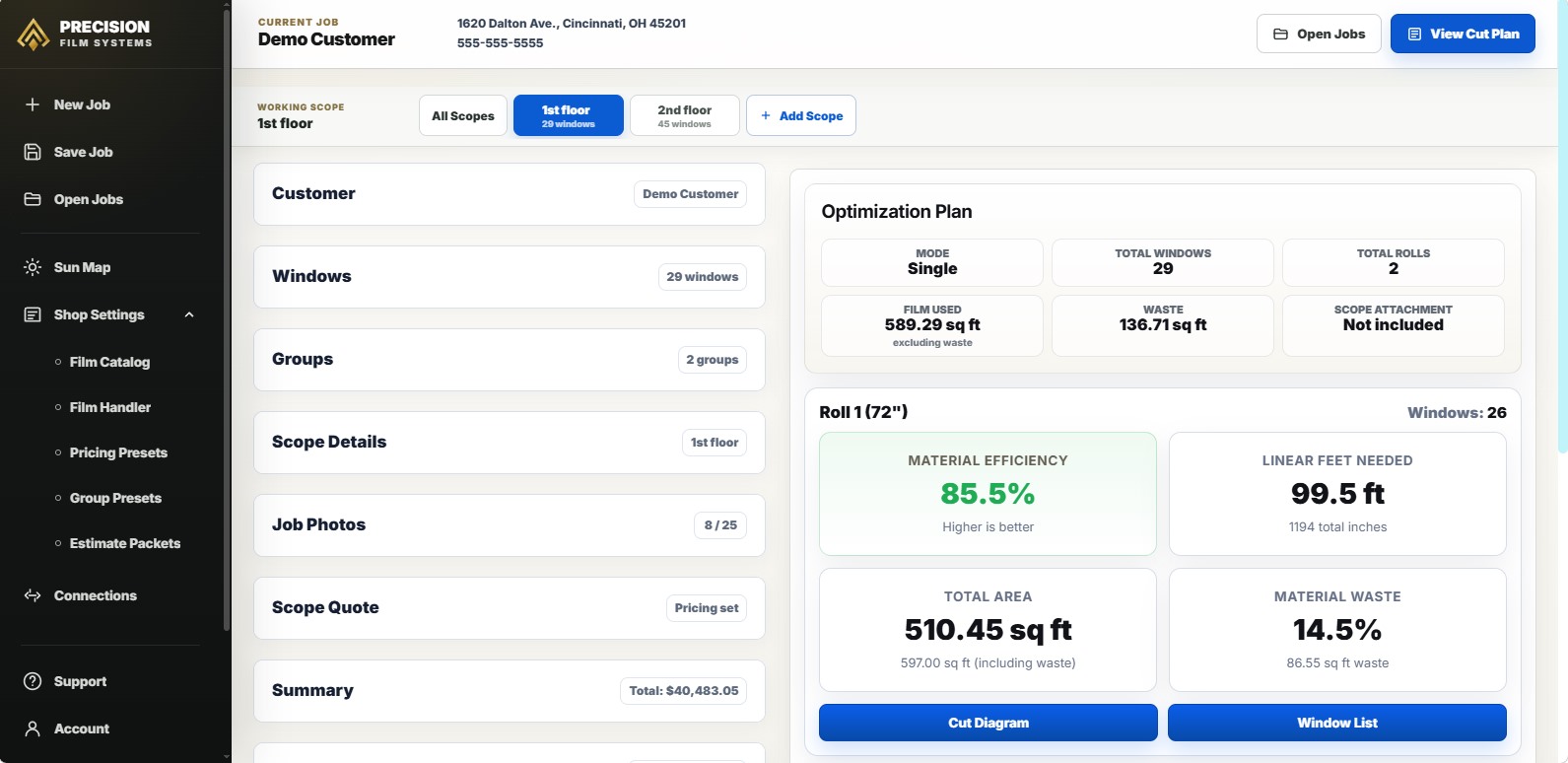
Precision Film Systems keeps one measured residential or commercial job connected to roll strategy, material requirements, partial rolls, groups and scopes, film selection, attachment, pricing, estimates, Visual Cut Diagrams, Film Handler production, and job output.

Try Solo lets you run one real job through the core Solo and Flex cut-planning workflow. Shop features are not included.

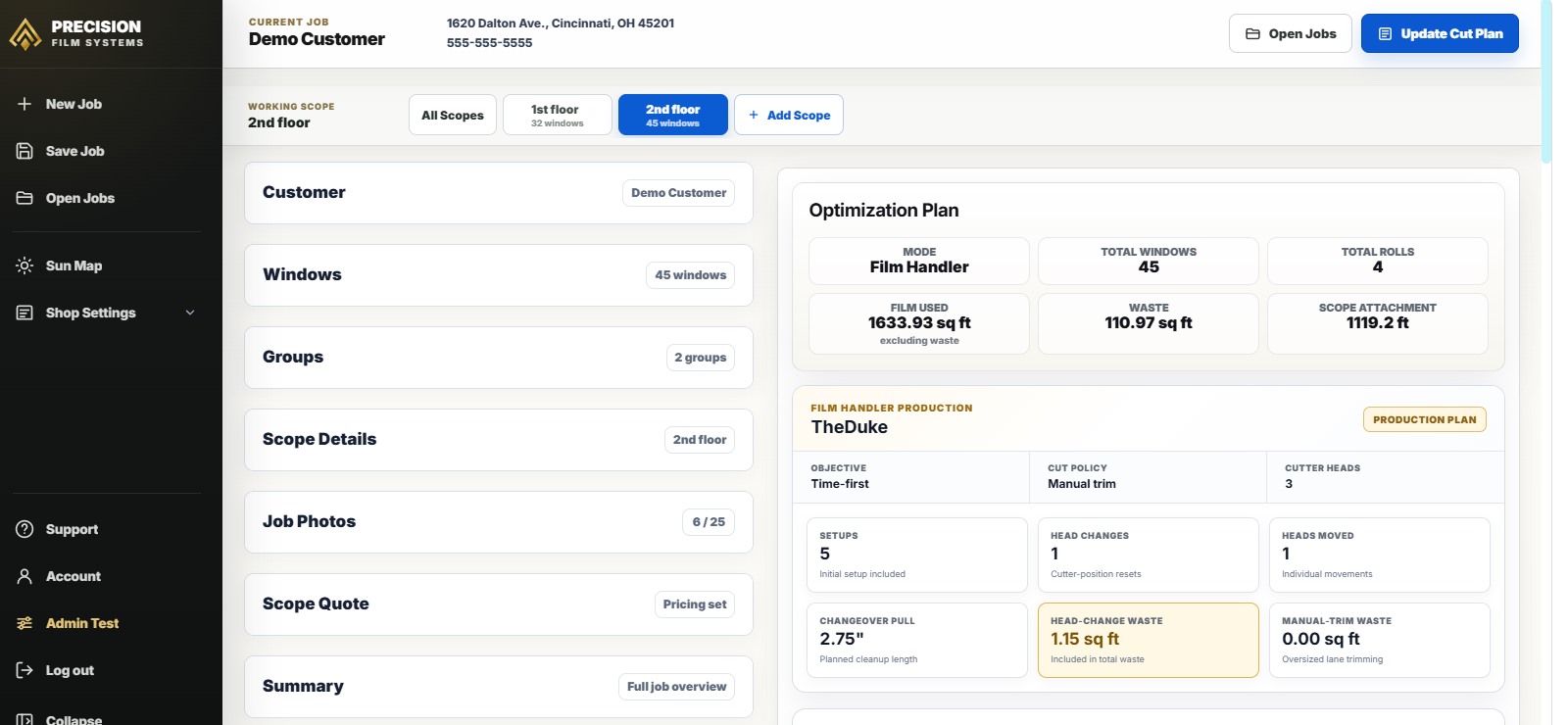
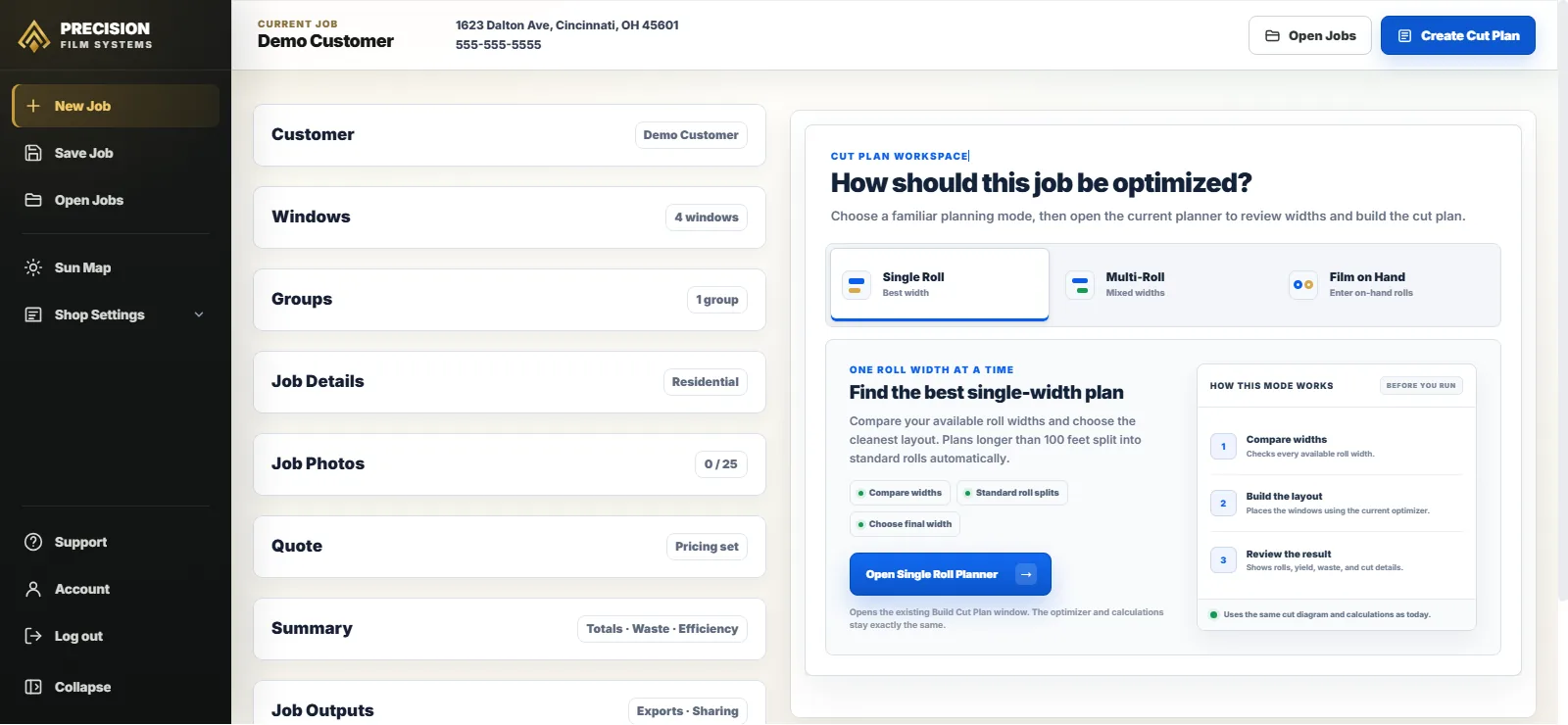
Precision Film Systems job workspace showing customer details, windows, groups, job details, and cut-plan optimization modes
Specialized Planning Layer

Purpose-built for the planning work around the cut plan.

Broader business software can handle CRM, scheduling, invoicing, accounting, and payments. Precision Film Systems works alongside those systems and goes deeper into the residential and commercial flat-glass planning decisions they do not specialize in.

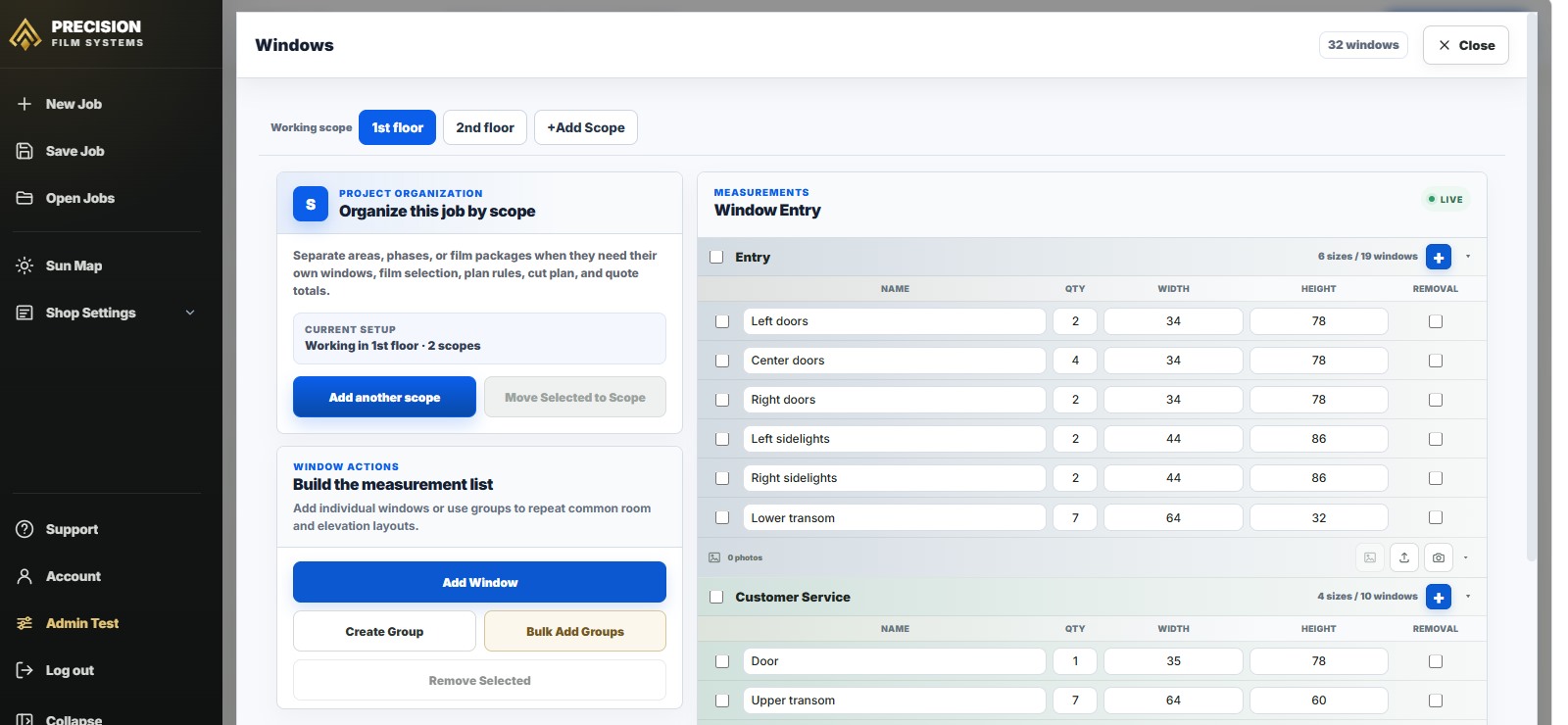
The measured panes remain connected to the customer and project, groups and scopes, film assignments, roll strategy, material requirements, pricing, estimates, Visual Cut Diagrams, Film Handler production, and combined job output as the work moves forward.

The measured job is the foundation. The cut plan is central. Shops can use the planning modules they need without configuring every available feature.

Real Job Proof

One Measured Job. Multiple Viable Material Strategies.

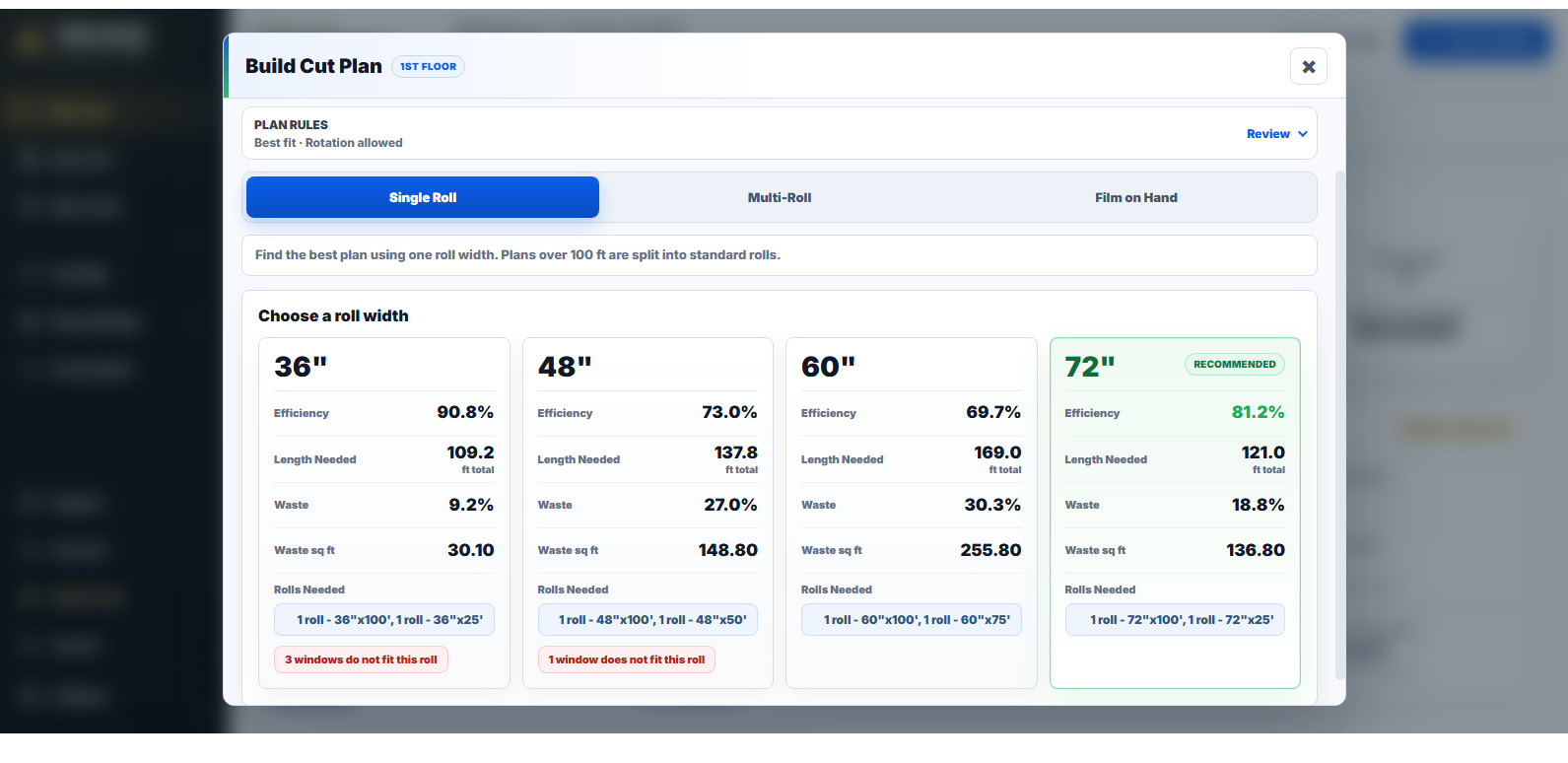
Roll-width comparison is one part of material planning. Review fit, linear feet, efficiency, and waste side by side, then weigh the inventory, handling, ordering, and production constraints that affect the final decision.

The answer depends on more than square footage.

48 Inch Roll Incomplete Fit
Material efficiency
67.9%
Linear feet needed
65.0 ft
Total area
464.54 sq ft
Waste
32.1%
Waste square footage
83.50 sq ft

Four windows do not fit this roll width, so the lower linear-foot result is incomplete rather than a workable plan.
72 Inch Roll Lower Linear Feet
Material efficiency
85.6%
Linear feet needed
90.4 ft
Total area
464.54 sq ft
Waste
14.4%
Waste square footage
78.00 sq ft

The 72 inch roll uses fewer linear feet than the 60 inch option but shows slightly more waste. It remains viable when the wider roll better fits the shop's material or production needs.

Example shown from a 29-window job run in Precision Film Systems using the same measurements across standard roll widths. See how a window film optimizer supports the roll-width decision, explore the broader architectural flat glass workflow, or compare the same job with the window film waste calculator.

Production Handoff

Carry the selected material plan into production.

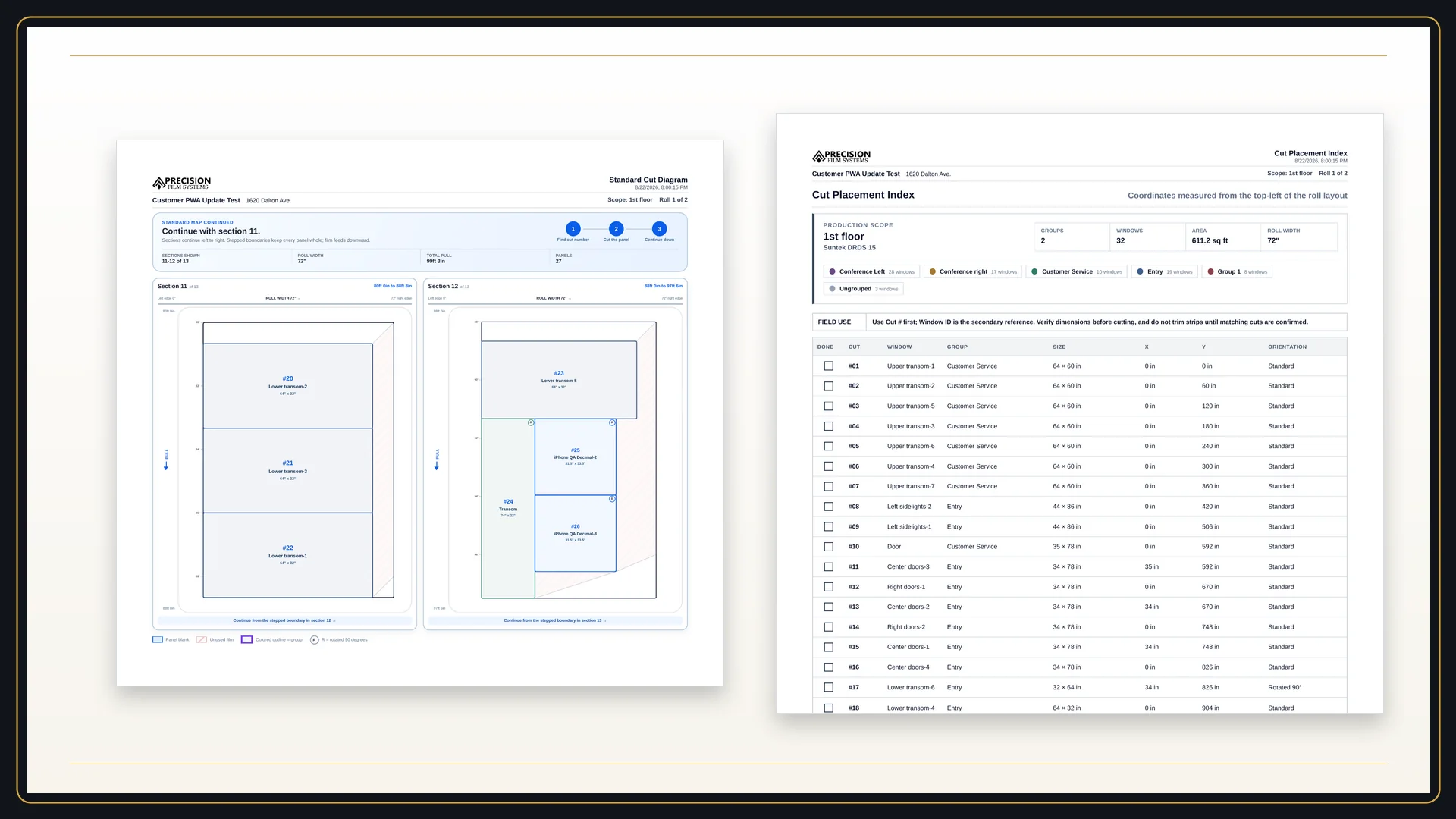
A material plan should lead to usable production information. Precision Film Systems creates Visual Cut Diagrams and window lists from the measured job so the film can be prepared from the same selected strategy whether it is cut by the owner, an installer, or someone else in the shop.

The plan becomes part of the handoff: measured windows, roll decisions, cut placement, and job structure stay connected when the work moves to the next person.

Precision Film Systems standard visual cut diagram and cut placement index for a commercial flat glass film job
Connected Workflow

From measured panes to customer and production output.

  1. Capture The Measured Job

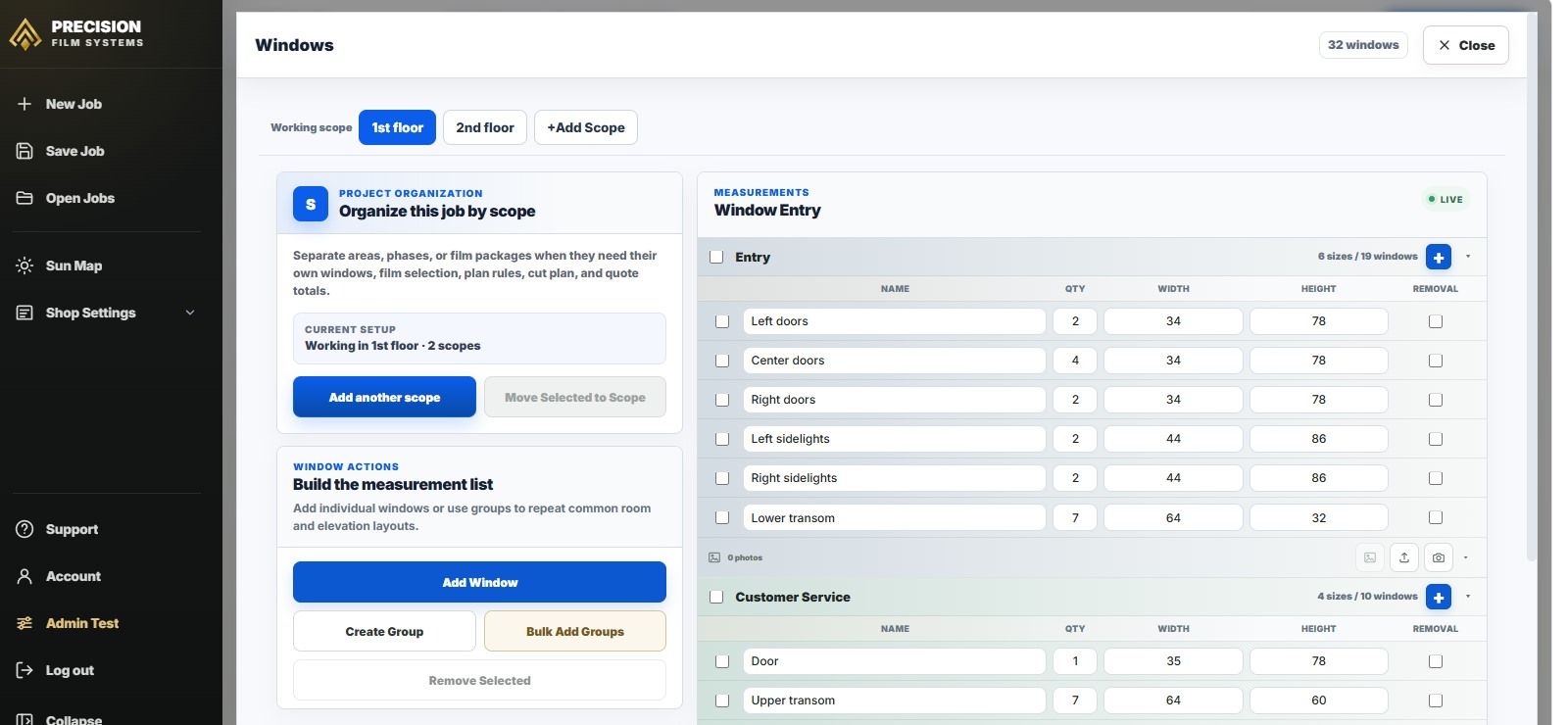
    Enter pane sizes, quantities, customer or project details, and the field information that gives the measurements context.

  2. Add The Job Context

    Keep films, groups, scopes, job details, security-film and attachment requirements, photos, and notes connected when they matter.

  3. Compare Material Strategies

    Review roll options, fit, linear feet, efficiency, waste, rotation, and available material before selecting the plan.

  4. Prepare Production Output

    Carry the selected strategy into the Visual Cut Diagram, window list, and roll-by-roll information used to prepare the film.

  5. Extend The Workflow When Needed

    With Shop, continue the same job into Film On Hand planning, pricing, estimates, customer response, Film Handler setup, and combined output.

Questions

A Few Things Worth Knowing

What is Precision Film Systems?

Precision Film Systems is flat-glass job-planning software built around the measured job and the cut plan. It connects the material and production decisions surrounding residential and commercial window film work.

How is it different from a basic cut optimizer?

Cut optimization is part of the system, but the deeper workflow can also account for multiple planning modes, partial rolls, scopes, estimates, job context, production output, and Film Handler-specific planning when those features are included in the selected plan.

What does Try Solo include?

Try Solo lets you run one real job through core Solo and Flex planning: standard roll comparisons, film metrics, a Visual Cut Diagram, and a window cut list. It does not include Shop features.

Does Precision Film Systems replace my CRM, accounting, or payment software?

No. Precision Film Systems is a specialized flat-glass planning layer that can work alongside the broader systems a shop already uses. It also supports professional judgment rather than replacing it.

Choose Your Starting Point

Choose how deep your planning workflow needs to go.

Try the core Solo cut-planning workflow, or compare plans to see how Precision Film Systems extends the measured job into partial-roll planning, scopes, estimates, Film Handler production, and connected job output.

Prepared Job Review

Have a complicated flat-glass job?

Send the measurements, quantities, scopes, film types, costs, roll details, groups, security-film information, and whatever else makes the job difficult. The job is prepared through the relevant Precision Film Systems workflow and the results are returned by email.

This can be a real job you are planning. Nothing is built live in front of you, no sales call is required, and the offer is strictly limited to one handoff per company.