
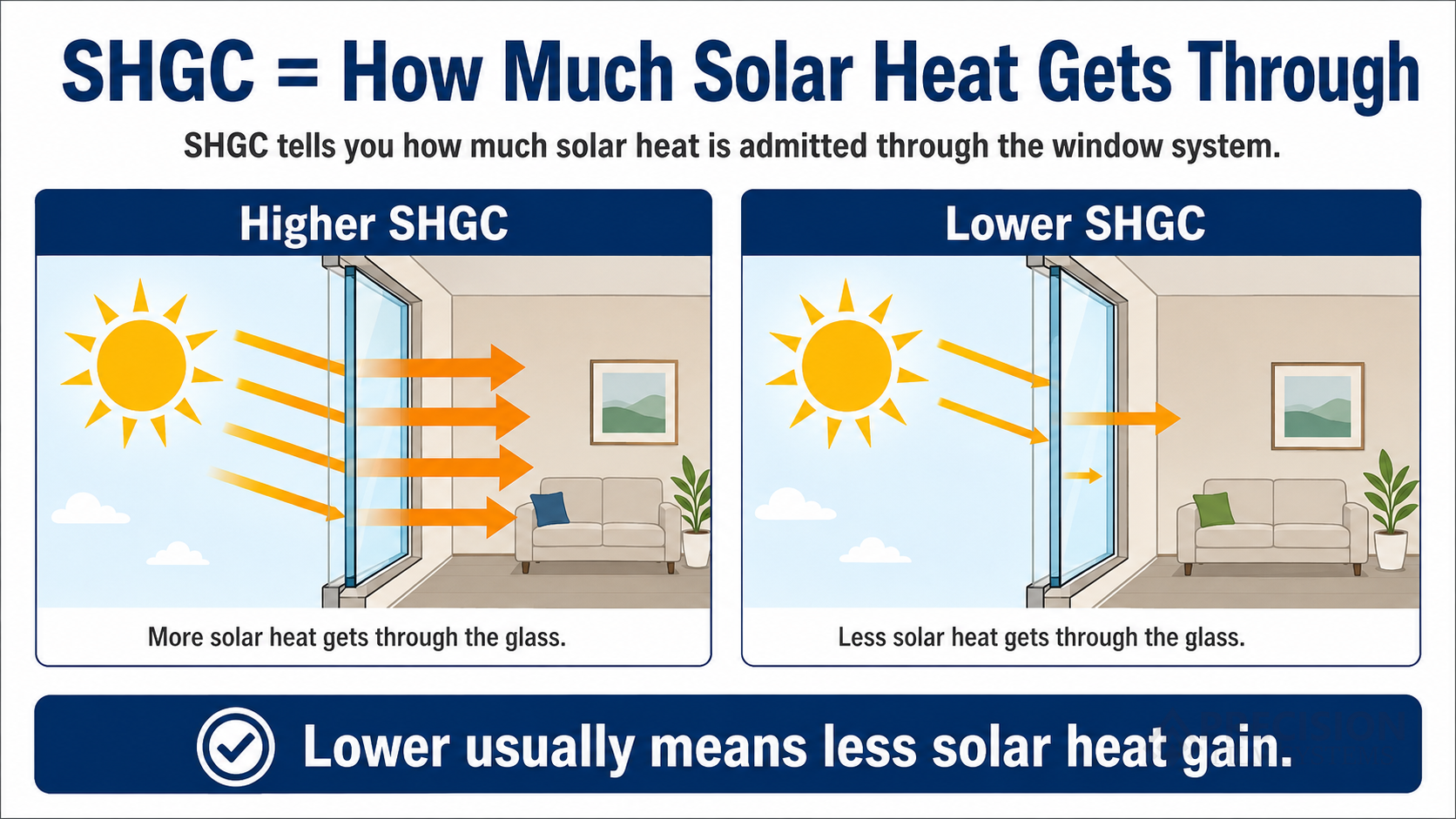
SHGC tells you how much solar heat gets through the window system.
Lower SHGC usually means less solar heat gain. That can help on hot offices, west-facing glass, storefronts, and rooms that pick up direct sun for part of the day.
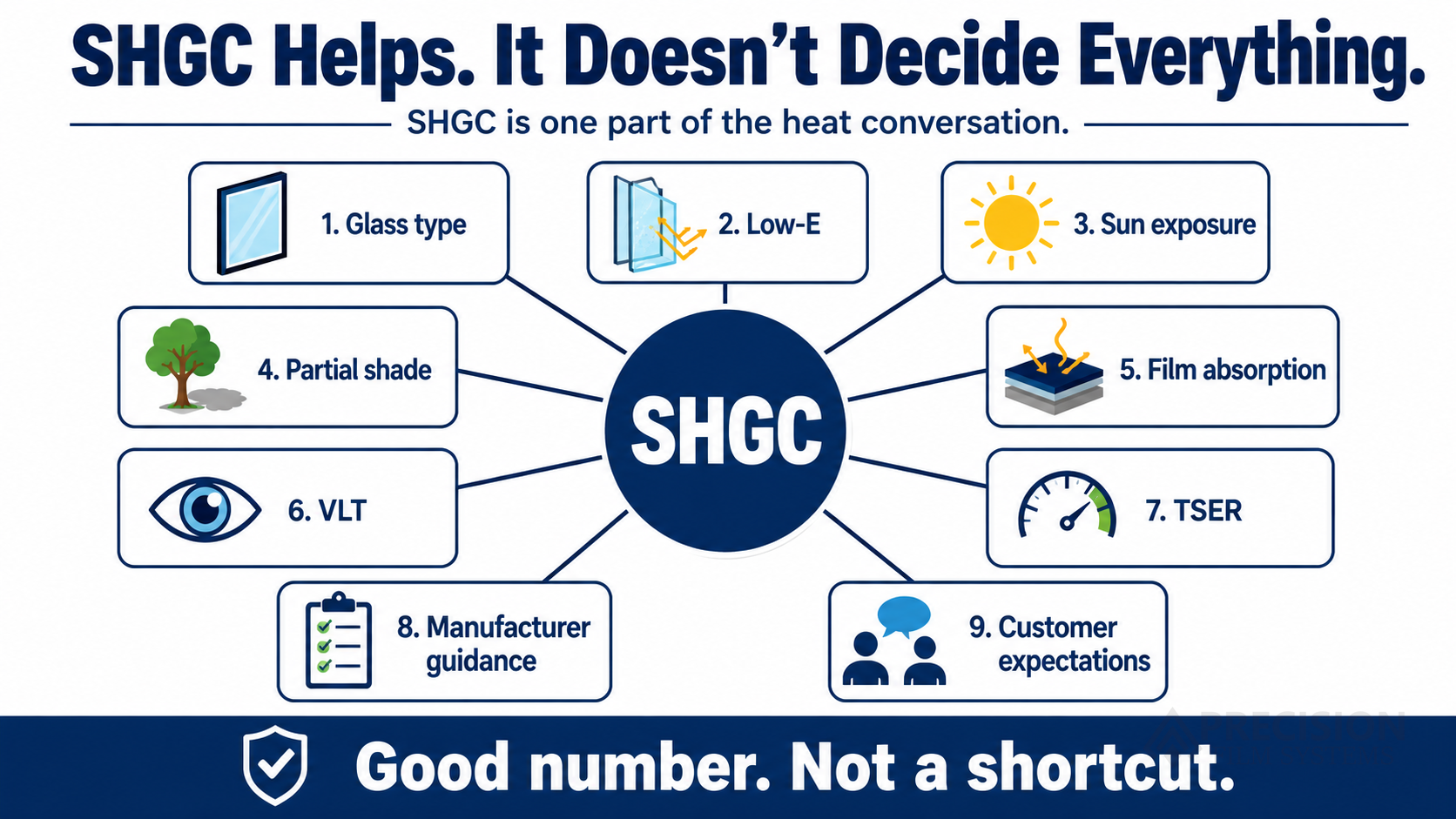
Do not use SHGC by itself to recommend a film. It does not tell you how dark the film will look. It does not tell you if the film is safe for the glass. It does not replace checking Low-E, exposure, partial shade, absorption, or manufacturer guidance.
What SHGC Means
SHGC stands for Solar Heat Gain Coefficient.
It describes how much solar heat is admitted through the glass and film system. Some heat can pass directly through. Some heat can be absorbed by the glass or film and move inward later.
For a customer, a simple explanation works best:
SHGC tells us how much solar heat gets through the window system. Lower usually means less solar heat coming in.
Where It Gets Misused
Customers often connect heat control with darkness. A darker film may be the right option, but darkness alone is not the heat-control number.
SHGC can also get mixed up with IR rejection or TSER. Those numbers are related to solar performance, but they do not say the same thing.
A low SHGC does not guarantee comfort. Room size, HVAC, glass area, sun angle, shading, furniture layout, and customer expectations still affect the result.
SHGC Is Not VLT
VLT tells you how much visible light passes through.
SHGC tells you how much solar heat is admitted through the window system.
A customer may want less heat without making the room too dark. Comparing SHGC along with VLT helps keep that conversation grounded.
SHGC Is Not TSER
TSER tells you how much total solar energy is rejected.
SHGC tells you how much solar heat is admitted.
Use both numbers when they help. Do not treat either one as a shortcut around the rest of the job review.
What to Check Before Recommending Film
Check the glass type, Low-E situation, insulated glass unit details when available, sun exposure, partial shade, film absorption, VLT, TSER, and current manufacturer guidance.
Oversized panes, damaged glass, unusual shading, or unknown Low-E glass should slow the recommendation down.
Customer Explanation
SHGC helps compare how much solar heat gets through the window system. Lower usually means less solar heat gain. We still need to match the film to the glass, the exposure, and what you want the room to feel and look like.
Installer Notes
Use SHGC when the customer's main issue is heat from the sun.
Do not use it as a standalone compatibility check.
Do not promise a specific comfort result from SHGC alone.
Related Terms
Sources and further reading
- 2026 Advanced Solar Control Education Guide - International Window Film Association Advanced reference on solar heat gain, glazing systems, absorbed and transmitted energy, and solar-control measurements.
- Window Film Ratings and Certification - National Fenestration Rating Council Independent overview of certified window-film energy ratings, labels, and product verification.
SHGC on a window film spec sheet
What does SHGC mean?
SHGC stands for Solar Heat Gain Coefficient. It tells you how much solar heat is admitted through the window system.
Is lower SHGC better?
For reducing solar heat gain, usually yes. Lower SHGC does not automatically mean the film is right for the glass or the customer's expectations.
Is SHGC the same as TSER?
No. SHGC and TSER are related to solar performance, but they explain different parts of the system.
Can SHGC tell me if a film is safe for the glass?
No. Compatibility still depends on glass type, film specs, exposure, shading, Low-E, absorption, and manufacturer guidance.