
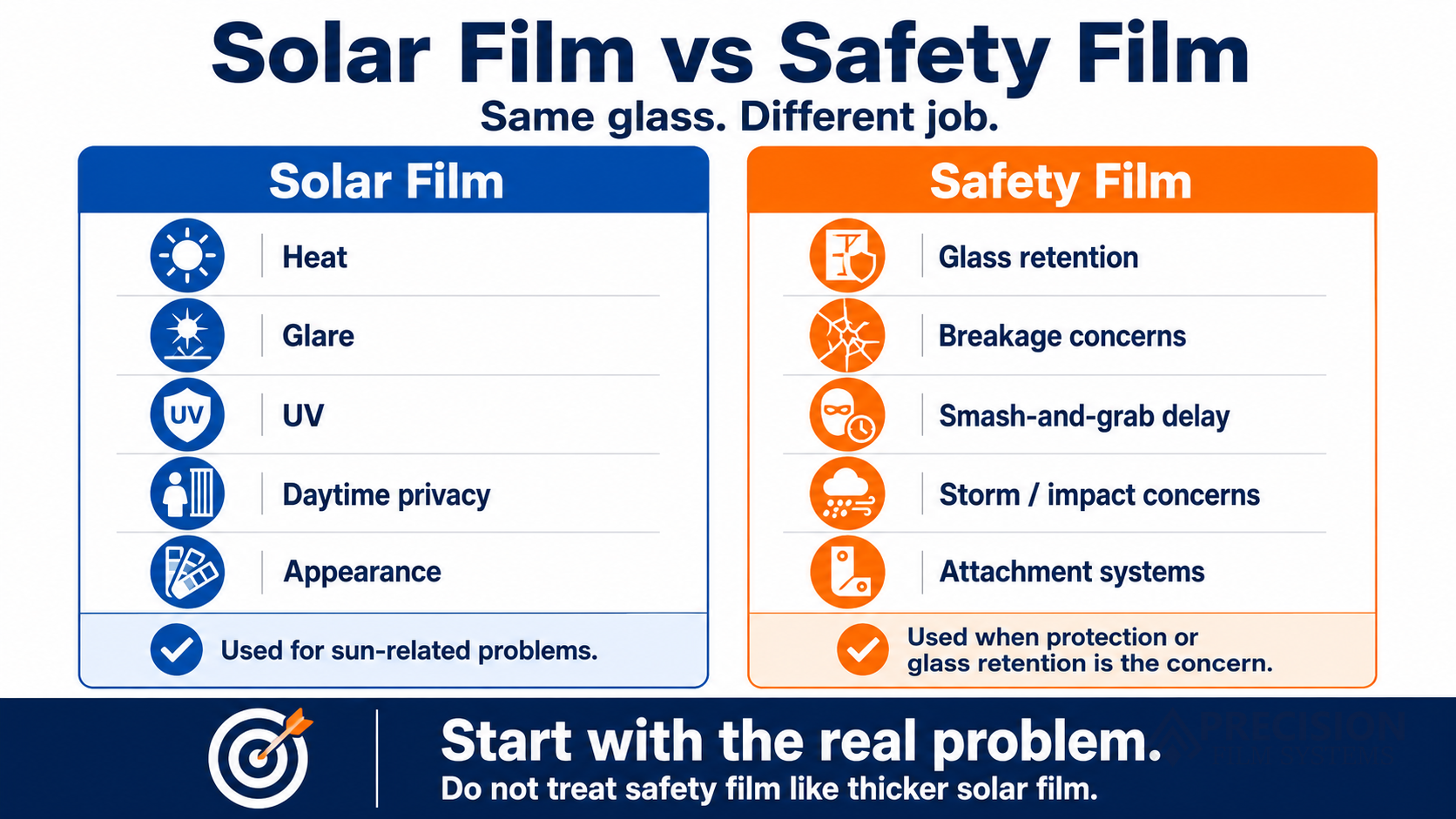
Safety film and solar film both go on glass, but they are not the same job.
Solar film is usually about sun-related problems. Safety film is about helping hold broken glass together after breakage or impact.
The customer's actual concern should decide the conversation.
Solar Film
Solar film is usually used for heat, glare, UV, fading, daytime privacy, appearance, and comfort near the glass.
If the room gets hot in the afternoon, the customer is probably asking for solar control.
If the sun is hitting a desk, TV, couch, conference table, or storefront display, the discussion should include VLT, TSER, SHGC, IR rejection, UV rejection, reflectance, absorption, glass type, and exposure.
Do not reduce the recommendation to "darker film." Darkness may help glare, but it is not the whole solar-performance conversation.
Safety Film
Safety film is used when the concern is breakage, impact, glass retention, smash-and-grab, storm exposure, schools, or commercial security.
Safety film does not make glass unbreakable.
It may help hold broken glass together. Some products and systems may help delay entry. Performance depends on the film, glass, frame, attachment method, and installation.
Safety film conversations usually involve mil thickness, adhesive, glass type, frame type, attachment method, specification requirements, and expectation-setting.
Do Not Mix the Two Without Checking the Product
A thick film is not automatically the right answer for heat.
A dark or reflective solar film is not a security product just because it makes the glass harder to see through.
Some products may combine solar and safety features. Check the actual specs before presenting the film that way.
Planning Differences
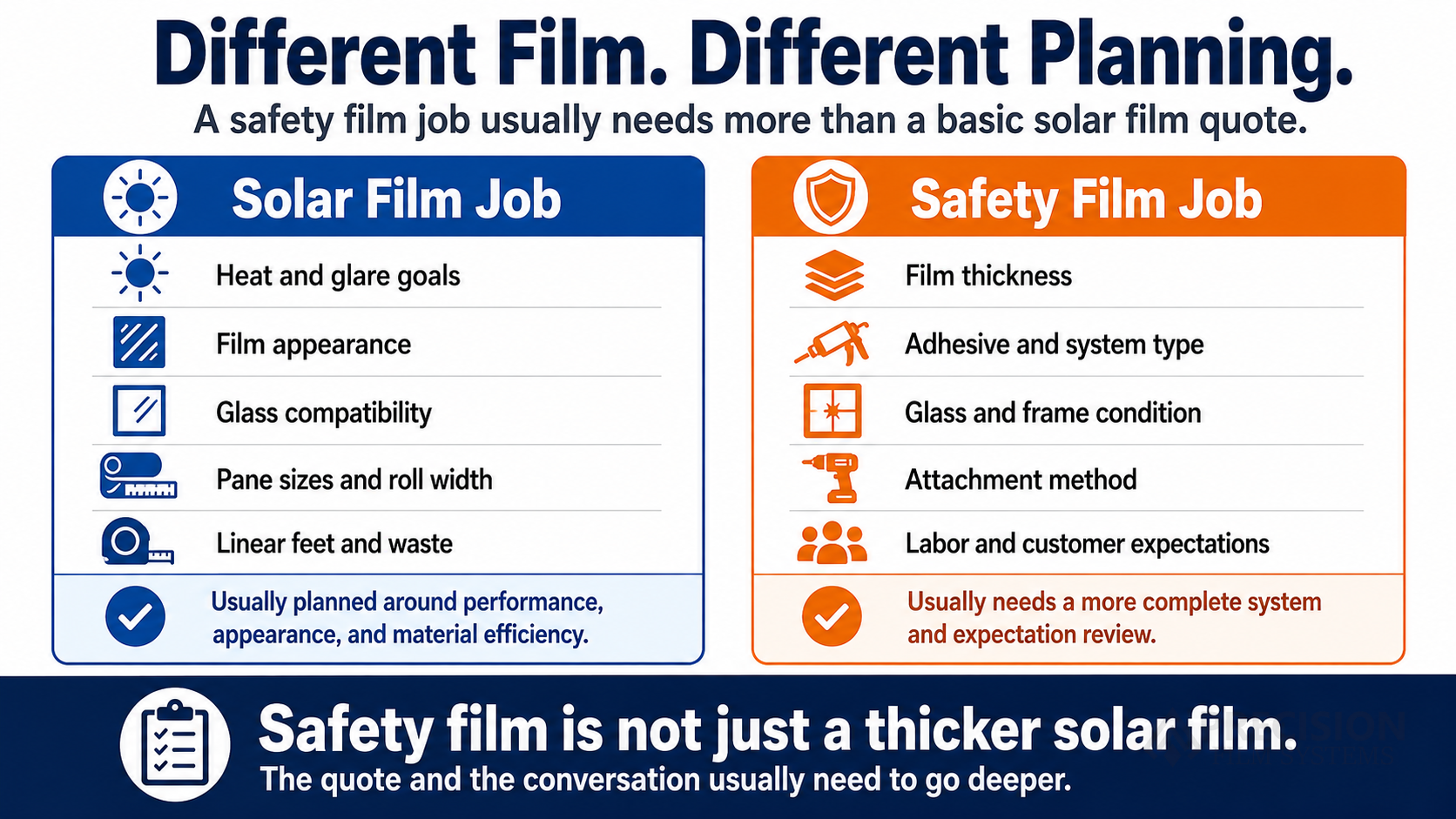
Solar film jobs are often planned around pane sizes, roll widths, linear feet, waste, exposure, glass type, and appearance goals.
Safety film can add thicker film handling, more install time, edge requirements, attachment systems, frame review, access concerns, and a more detailed conversation about expectations.
A safety film quote based only on square footage can miss labor and system requirements.
Customer Explanation
Solar film is mainly for sun problems like heat, glare, UV, and appearance. Safety film is mainly for helping hold broken glass together. They are both window films, but they solve different problems.
For safety expectations:
Safety film does not make glass unbreakable. It can help hold broken glass together depending on the product, glass, frame, and installation system.
Installer Notes
Start with the customer's actual concern.
Heat, glare, fading, and appearance belong in the solar film lane.
Breakage, impact, intrusion delay, and glass retention belong in the safety film lane.
Do not present either film type as solving problems the product does not support.
Related Terms
- Solar Film
- Safety Film
- Security Film
- Mil Rating
- Attachment System
- Glass Retention
- VLT
- TSER
- SHGC
Sources and further reading
- Specifying Safety and Security Window Film - International Window Film Association Industry overview of tested systems, attachment considerations, performance limits, and questions to ask before making safety or security claims.
- ANSI Z97.1-2026 - Safety Glazing Materials Used in Buildings Official standard page describing safety-performance specifications and test methods for glazing materials used in buildings.
A film product, installed film-and-glass assembly, and complete attachment system are not interchangeable claims. Use the exact manufacturer documentation and applicable tested-system report for the proposed application.
Safety film and solar film
Is safety film the same as solar film?
No. Solar film is mainly for sun-related problems. Safety film is mainly for helping hold broken glass together after breakage.
Does safety film make glass unbreakable?
No. Glass can still break.
Can safety film reduce heat too?
Some safety films may also have solar-control properties. Check the specific product specs.
Why can safety film cost more to install?
It may involve thicker film, harder handling, attachment systems, frame details, more labor, and a more careful expectation review.