
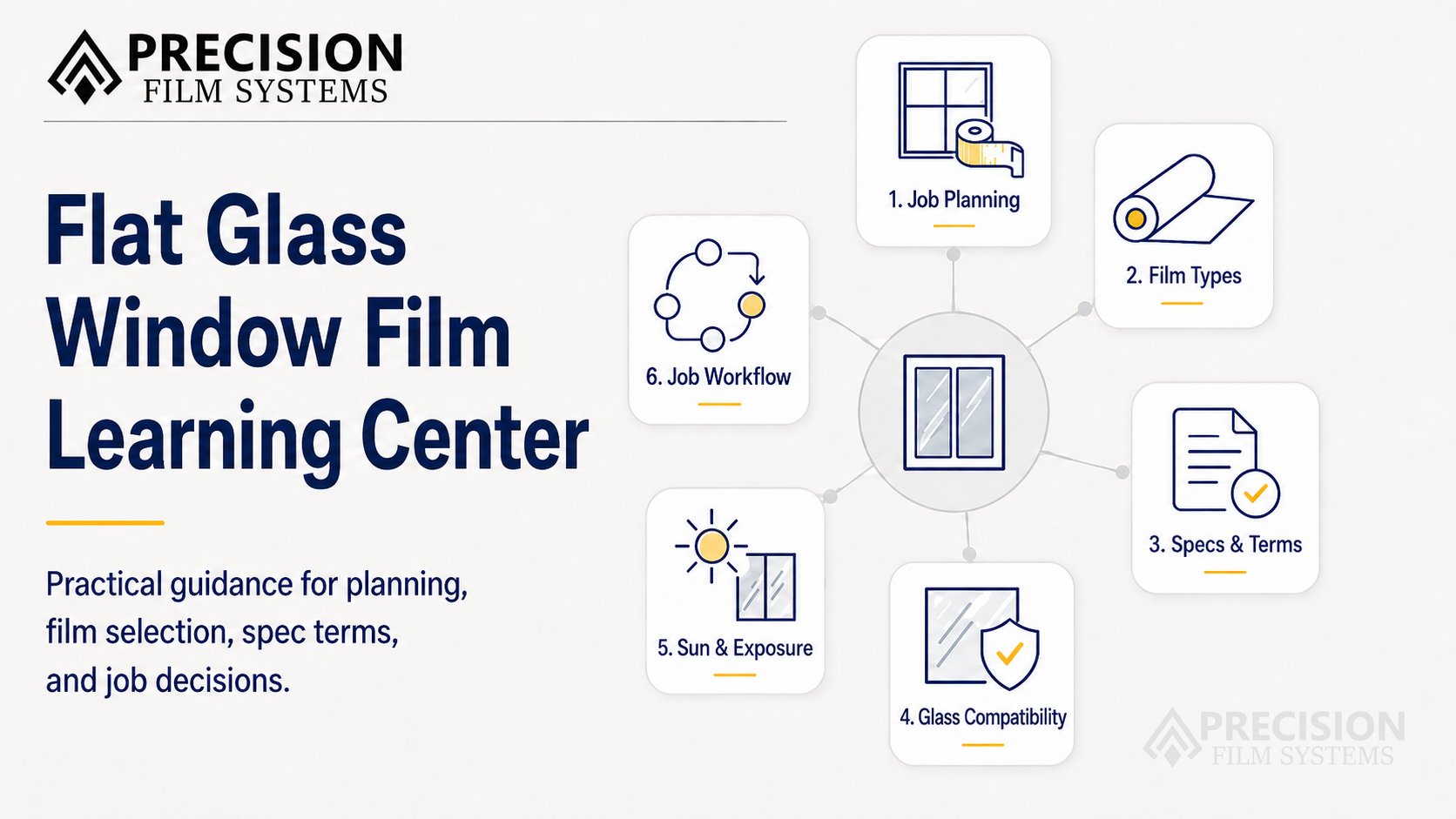
Adding residential and commercial window tinting can give an automotive shop another way to use its film knowledge, installation experience, customer base, and local reputation. The installation experience transfers, but the work around the installation changes.
A flat-glass job starts with a property that has to be inspected, measured, documented, priced, planned, and carried through the shop. Before actively marketing the service, the shop needs a dependable way to evaluate the glass, verify the film choice, collect the right information, determine the material requirement, and prepare the job for installation.
The first step is not buying every architectural film available or chasing a large commercial project. Build the process first, then take the residential or commercial work that fits what the shop is prepared to handle.
Define the Work the Shop Will Take On
Start with a service offer the shop can evaluate, source, price, and install with its current people and support. Define the types of property and film applications you will accept, along with the conditions that require more review or a referral. That gives the rest of the setup work a practical target.
If the market choice is still open, use Residential vs Commercial Window Film: Where Should an Automotive Shop Start?. It compares the customer relationships, site conditions, technical support, equipment, and estimating demands behind each route. Once the shop has chosen its starting offer, the preparation below applies to either market.
Learn the Glass Side Before Selling the Work
Film-to-glass compatibility needs to be familiar territory before architectural film is actively sold. That starts with identifying common glass and window conditions and recognizing when the information on site is not enough to make the decision.
Single-pane and insulated glass, tempered glass, laminated glass, tinted glass, Low-E coatings, and the construction of the window can all affect the film review. Site conditions also enter the decision. Direct exposure, interior and exterior shading, hard shade lines, overhangs, blinds, nearby buildings, pane size, existing damage, and edge conditions may all deserve attention.
Partial shading needs particular care because different areas of the same pane can heat differently. Film absorption, glass construction, Low-E coatings, existing damage, and current manufacturer requirements are part of that review.
Get familiar with the film-to-glass charts and technical guidance provided by the manufacturers the shop expects to use. Know where to find the current documents, what information must be collected at the property, and who to contact when the glass or application needs additional review. Precision Film Systems does not determine compatibility or approve a film for a glass system.
Use these Learning Center resources to build that foundation:
- Glass and Film Compatibility Awareness covers the glass, exposure, shading, film, and existing conditions that should be reviewed before recommending film.
- Emissivity and Low-E: Plain-English Definitions explains Low-E coatings, insulated glass units, coating locations, and the information that may need to be confirmed.
- Total Solar Absorbance, Reflectance, and Transmittance on Film Specs explains the solar-energy numbers used when comparing film specifications.
- Why Manufacturer Film-to-Glass Guidance Should Stay With the Job File covers keeping the technical source and the job conditions connected.
Installation skill is one part of the work. Recommending an architectural film also means knowing what must be verified before the film is committed to the estimate.
Establish the Films the Shop Is Prepared to Sell
A shop does not need a massive architectural film catalog to begin. It needs a useful group of products it understands and can reliably source.
Find a manufacturer or distributor that supports the type of work the shop plans to pursue. Review the solar-control, privacy, decorative, safety, and other product lines that fit the local market. Record the available roll widths, current performance data, warranty requirements, film-to-glass guidance, order requirements, and technical-support contacts.
A smaller working catalog is easier to price, explain, and keep current. Expand it when completed estimates and actual customer requests show what the market needs.
Choose the First Jobs Carefully
A first flat-glass project does not have to be tiny, but it should be understandable. The shop should be able to inspect the glass, define the scope, source the film, plan the material, price the work, and prepare the installation without unresolved questions following the job into production.
A residential solar-control project, small office, storefront, conference room, entry area, or privacy-film project may provide that opportunity. Job size alone does not determine complexity. Ten straightforward residential windows may be easier to manage than two large panes with uncertain glass, strong partial shading, difficult access, or a film choice that still needs technical review.
Evaluate the whole job before deciding whether it belongs in the shop's early flat-glass workload.
Decide What the Site Visit Must Produce
A useful site visit should produce enough information to finish the job plan after leaving the property. Measurements and quantities are part of it, but those numbers need context.
Record which windows belong together, the film being considered for each area, glass and compatibility notes, removal requirements, access conditions, customer requests, and anything that may affect the estimate or installation. Take photos when they help document glass markings, surrounding conditions, partial shading, existing damage, access, or the location of the measured panes.
The information should still make sense when the job is opened later or handed to another person. What to Write Down Before You Leave the Job Site covers the measurements, photos, conditions, and open questions worth keeping with the project.
Build the Planning Process Before Jobs Start Stacking Up
Once the measurements are taken and the film has been selected, the job has to become something the shop can price, order, cut, and install.
The planning process should answer practical questions:
- Which windows use which film?
- Which roll widths are available for that product?
- How do the measured panes fit those widths?
- How many linear feet does each option use?
- What purchase length is required?
- How much material is lost in the cut layout?
- Will the remaining material be useful after this job?
- How will the film be cut and identified?
- What information must reach the installer?
Square footage is the starting point for many estimates, but it is not the whole material decision. Two jobs with similar measured area can require different amounts of film because the pane dimensions fit the roll differently. The same pane list can also produce different linear-foot and waste results across the available roll widths.
How to Turn Window Measurements Into a Material Plan explains how pane dimensions, quantities, roll widths, orientation, purchase length, waste, and usable remainder work together. How to Choose the Best Roll Size for Residential and Commercial Window Film Jobs goes deeper into comparing common roll widths against a real pane list.
Where Precision Film Systems Fits
Precision Film Systems is built around the planning work that begins with a measured residential or commercial flat-glass job. It is not automotive pattern software, a CRM, an accounting system, or a replacement for manufacturer technical guidance.
Enter the panes once and keep their dimensions, quantities, labels, and groups connected to the project. Precision Film Systems can compare available roll widths by fit, linear feet, efficiency, and waste, then generate a Visual Cut Diagram showing how the pieces are arranged on the selected roll.
For a straightforward job, the workflow may be as simple as entering a set of residential windows, comparing the roll widths available for the selected film, choosing the material plan, and using that information to support the estimate.
Larger jobs can be organized by room, elevation, work area, film type, phase, or scope. Photos and project details can stay with the job. Shop accounts can also keep film information, pricing, charges, scopes, and the customer estimate connected to the same measured work.
A typical planning sequence looks like this:
- Survey the property and document the glass and site conditions.
- Select the film and verify compatibility where required.
- Enter and organize the measured panes.
- Compare the roll widths available for that film.
- Review linear feet, efficiency, waste, purchase needs, and usable remainder.
- Select the material plan and review the Visual Cut Diagram.
- Build the estimate from the measured scope and material information.
- Carry the accepted job into cutting and installation.
Manufacturer guidance remains the source for film-to-glass approval. Precision Film Systems handles the measured job-planning side after the necessary property and film information has been collected.
Price the Job That Was Actually Measured
Flat-glass pricing varies too much for another shop's square-foot rate to become the pricing system for your business. Film cost, material usage, labor, removal, travel, access, equipment, minimum charges, overhead, market conditions, and the actual scope all affect the number.
Build early estimates from the shop's own costs and the work being proposed. Pay attention to both film usage and purchase requirements because those numbers are not always the same. A job may use 37 linear feet but require a 50-foot purchase. The remaining film may have value later, but the current job still has to account for the material required to complete it.
Completed work will eventually provide better pricing information than a generic number from another market. Record what the job used, how long the work took, which additional charges were needed, and which assumptions changed after the estimate.
Flat Glass Estimating for Automotive Tint Shops goes deeper into building the estimate from the measured panes, material plan, labor, access, removal, and project-specific charges. How to Price Your First Residential Window Film Job focuses on residential pricing structure without prescribing a market rate.
Do Not Stock the Entire Industry Before There Are Customers
Architectural film inventory can grow with the business. Early on, ordering around sold work gives the shop time to see which films and widths actually move. Completed projects will show whether certain products become regular sellers and whether particular roll widths repeatedly fit the work being sold.
Those are stronger reasons to stock material than trying to predict demand before the shop has enough flat-glass volume. Partial rolls and usable remainder also become more important as the work grows. Film left from one project may be useful on another when it is protected, identified, and included in future planning.
Precision Film Systems Shop includes Film on Hand planning. Existing partial rolls can be entered as available material and considered when planning another job before additional film is ordered.
Keep the Estimate Connected to the Job
The estimate should reflect what was found and planned. Customer information, measured areas, selected film, removal, access, pricing, project notes, and other charges should stay connected to the scope that produced the material plan.
That connection becomes more useful as the work grows. A change in film, quantity, scope, or measured glass can affect both material requirements and price. Keeping the job information together makes the change visible before an outdated plan or estimate moves forward.
Precision Film Systems Shop can use the measured job, film information, pricing settings, scopes, charges, and project details to build a customer estimate. The project can continue into the cut plan and installation handoff after the work is accepted.
The software can sit beside the systems already used for automotive scheduling, CRM, accounting, invoicing, or vehicle patterns. It is built for the measured residential and commercial flat-glass side of the business.
Let the First Jobs Improve the Process
The first completed jobs will show which parts of the process need adjustment. The shop may change what gets recorded during the site visit, which films it offers, how labor is priced, which widths it stocks, how much extra material it orders, how jobs are grouped, or what installers need before arriving.
Use the information from real work. After several completed jobs, the process should reflect what the shop has actually encountered instead of what it expected before the service was offered.
Move Into Larger Work When the Process Can Support It
Larger commercial work adds more information before it adds anything else. More panes, elevations, film types, phases, access requirements, schedules, crews, and customer contacts have to remain connected to the same project.
When the shop already has a dependable way to inspect the glass, document the property, select and verify the film, plan material, estimate the work, and prepare the installation, a larger project becomes more scope moving through an established process.
From Vehicle Tinting to Commercial Window Film: What Changes in the Shop Workflow explains how commercial work changes the organization, estimating, material planning, phasing, and handoff around the job.
Put the Preparation to Work
Before promoting the service, establish the technical support, supplier access, and documentation needed for the jobs the shop intends to accept. Then carry a real project through site review, material planning, estimating, and installation preparation. Use what that project reveals to improve the process before widening the offer.
For the supporting articles and checklists, use the Getting Into Flat Glass learning path. It organizes the resources by stage so the shop can return to the part it needs without working through the entire guide again.
Start With the Foundation
Before actively pursuing residential or commercial flat glass, make sure the shop can answer these questions:
- Can the shop identify the common glass and window conditions it is likely to encounter?
- Does it know where and how to verify film-to-glass compatibility?
- Can it recognize partial shading and other conditions that deserve closer review?
- Does it have a reliable architectural film source and current technical information?
- Does the site visit collect enough information to finish the estimate and material plan?
- Can the measured panes become a material plan instead of stopping at square footage?
- Can the job be priced from the shop's own material, labor, and operating costs?
- Can the job information move from the estimate through ordering, cutting, and installation?
Once those pieces are in place, take the work that fits the shop's current capabilities and build from there. Prepare the residential and commercial sections of the shop's website before sending customers to them, then use a focused plan for introducing residential film to existing automotive customers.
If a completed or measured flat-glass job is available, run the original pane list through Precision Film Systems. Compare the roll options, review the material plan and Visual Cut Diagram, and see how the same job information can move from measurements into estimating and production.
Frequently Asked Questions
What should an automotive tint shop learn before offering flat glass?
Start with architectural glass identification, window construction, film-to-glass compatibility, Low-E conditions, partial shading, sun exposure, film specifications, and the current manufacturer guidance used to review a proposed film for a glass system. The shop also needs a process for measuring, documenting, pricing, material planning, and preparing the installation.
How do I know which window film is appropriate for a particular glass type?
Use the current film-to-glass guidance from the film manufacturer and collect enough information about the glass and site conditions to apply that guidance correctly. Glass construction, Low-E coatings, insulated units, film absorption, shading, exposure, pane condition, and other factors may need to be considered.
Is square footage enough to order film for a flat-glass job?
No. Square footage describes the measured glass area. The material requirement also depends on pane dimensions, quantities, available roll widths, orientation, linear feet, cut layout, purchase length, waste, and usable remainder.
How does Precision Film Systems help with flat-glass work?
Precision Film Systems turns measured residential and commercial flat-glass jobs into organized pane lists, roll-width comparisons, material numbers, Visual Cut Diagrams, and job output. Shop accounts add scopes, photos, Film on Hand planning, film information, pricing, estimates, and other project details.
Does Precision Film Systems determine film-to-glass compatibility?
No. Compatibility should be determined from the actual glass and site conditions using current manufacturer technical guidance. Precision Film Systems handles the measured job-planning, estimating, and production side after the necessary information has been gathered.
Does Precision Film Systems replace automotive tint software?
No. Precision Film Systems does not provide vehicle pattern libraries or automotive plotter templates. It is designed for measured residential and commercial flat-glass work and can be used alongside the systems a shop already uses for automotive tinting.
Thinking about adding flat glass? Run a real residential or commercial job through Precision Film Systems and see how the measurements move into roll-width comparisons, material planning, a Visual Cut Diagram, and estimate-ready job information.