
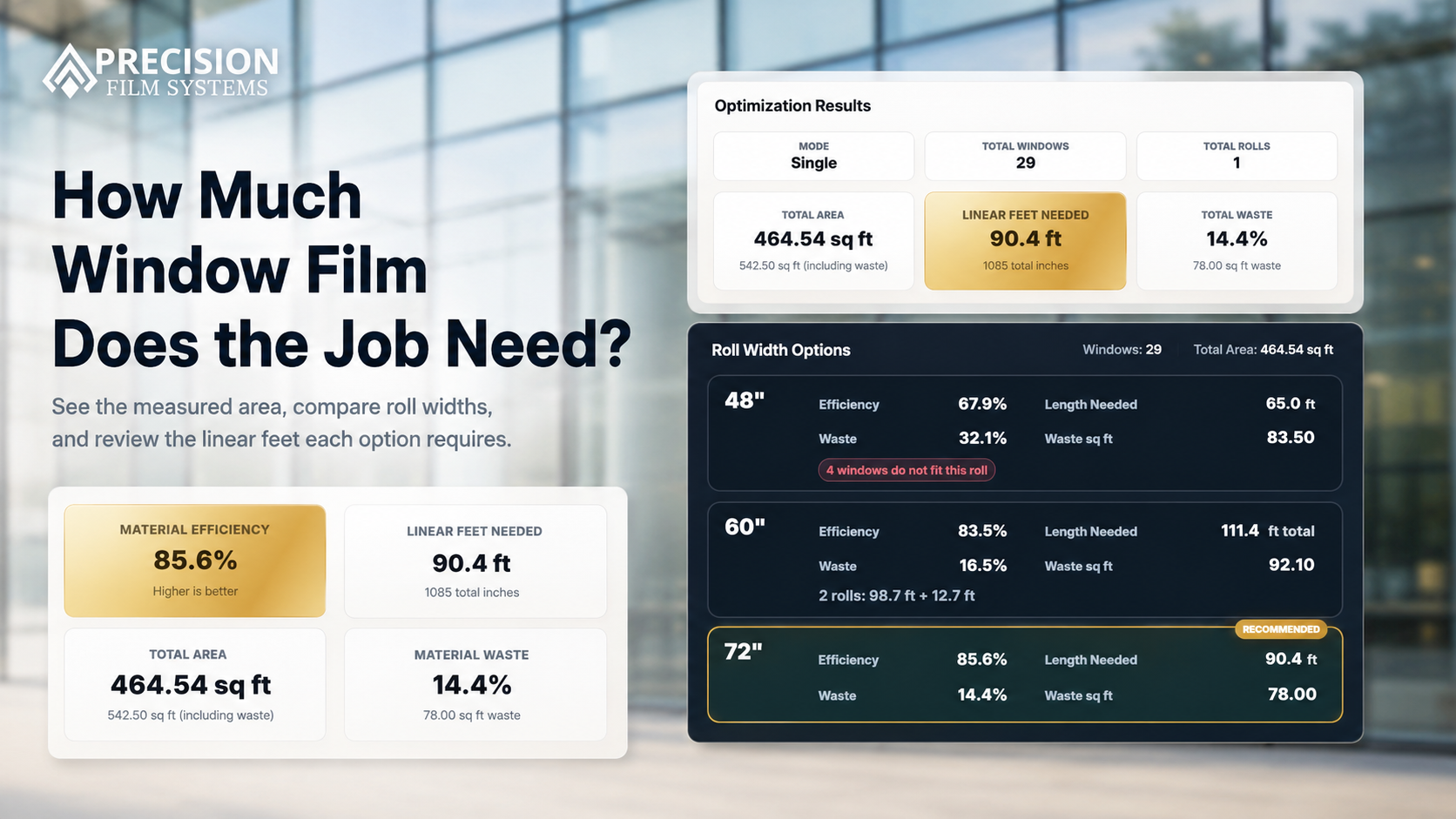
Film needed is a roll-based question, not only an area question.
Measured square footage tells you how much glass is being covered. The amount of film a job may use depends on how the entered pane sizes fit the selected roll width and how many linear feet the layout requires.
A useful material check separates cut-layout waste from remainder. The used length may not match the length purchased, and leftover film is only usable inventory when it is protected, labeled, tracked, and realistic for another job.
Total the glass area from actual pane sizes and quantities.
Add each repeated pane group to calculate measured glass square footage. This is the starting number; roll width, orientation, fit, linear feet, order length, and remainder still determine how much film the job may use.
Four numbers can point to four different decisions.
A material plan is stronger when the shop can see measured glass, linear feet, order length, and remainder separately instead of treating them as one interchangeable total.
Measured area
The total glass surface covered by the entered panes.
Linear feet used
The roll length required by the proposed cut layout.
Order length
The amount the shop may need to buy or pull after supplier increments and allowance are considered.
Remainder
Film left after the plan or order. It becomes usable inventory only when the shop can realistically use it later.
Start with panes, then review the roll behavior.
The demo keeps the job at the pane level so material usage is based on how the windows fit the roll, not only on a final square-foot total.
-
Enter the pane list
Record width, height, quantity, film, and groups for repeated sections and odd panes.
-
Compare widths
Run the same job against standard roll widths and watch for fit warnings.
-
Review used length
Compare linear feet, efficiency, and cut-layout waste before treating one option as better.
-
Decide what to order
Use the layout result alongside supplier increments, allowance, roll cost, handling, and likely remainder use.
Used length and purchased length are not always the same.
A layout may use 91.5 linear feet while the film is ordered as a 100 foot length. The used length is part of the cut plan. The remaining 8.5 feet is remainder, not automatically waste.
Another option may use fewer linear feet but require a wider roll, a different order increment, or leave a remainder that is less useful to the shop. The final decision still belongs with the installer or shop.
| Roll option | Linear feet used | Likely order length | Remainder | Planning note |
|---|---|---|---|---|
| 60 inch roll | 91.5 ft | 100 ft | 8.5 ft | Remainder may be usable if it is tracked and fits future work. |
| 72 inch roll | 78.0 ft | 100 ft | 22.0 ft | Uses less length, but the wider roll and larger remainder need review. |
| 48 inch roll | 64.0 ft | 75 ft | 11.0 ft | Not useful as a full-job option if wider panes do not fit. |
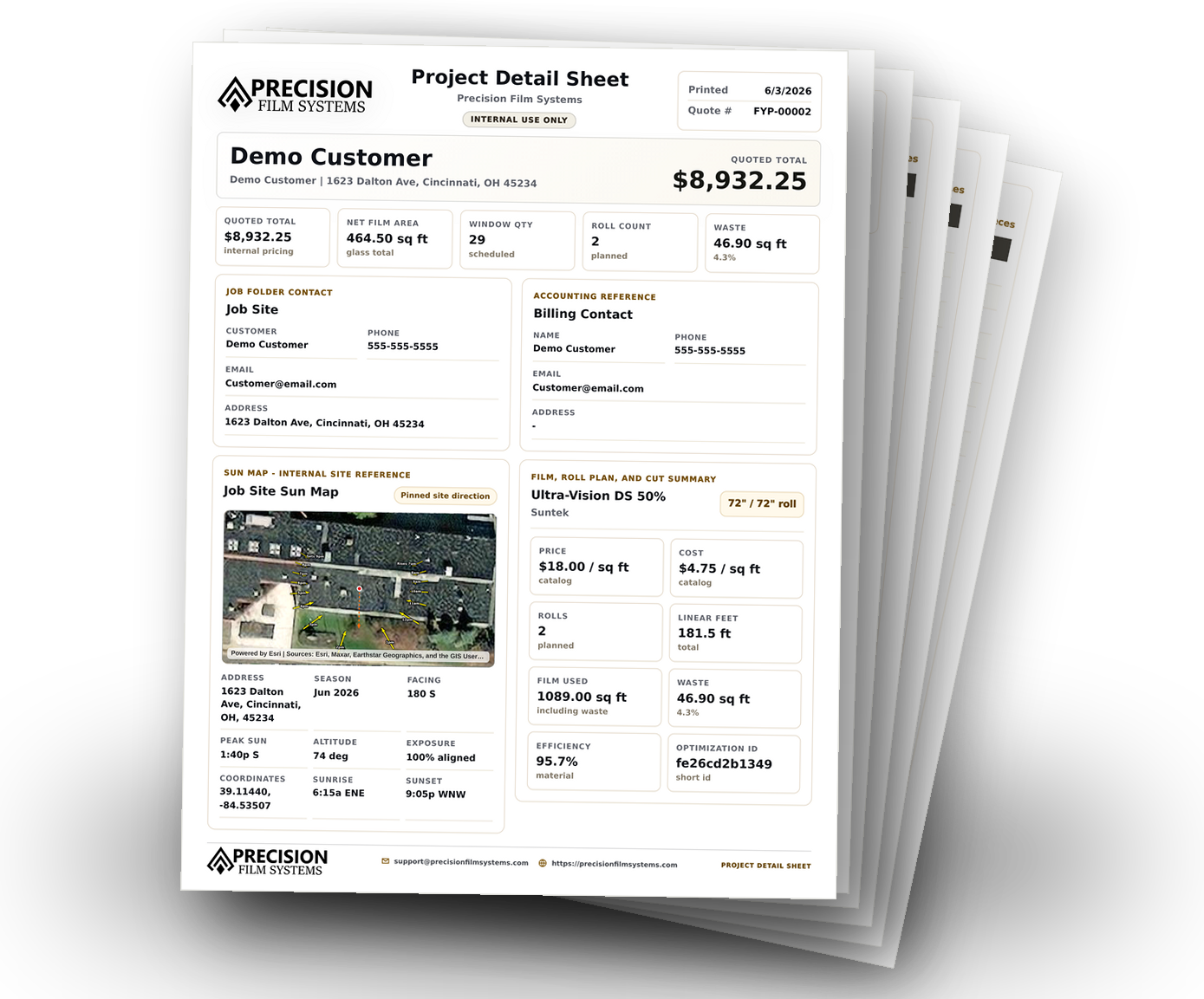
A roll-aware way to check the amount of film behind the job.
Precision Film Systems helps shops turn pane measurements into roll-width comparisons, linear-foot numbers, waste visibility, cut diagrams, and job output.
The app does not tell every shop to order the same extra percentage. It gives the material plan a clearer starting point so the shop can add its normal allowance and supplier constraints with better context.
This material-requirement check is one part of the broader measured-job workflow; with Shop, the same job can continue into scopes, pricing, estimates, cut plans, and production output.
- Calculate measured glass area from actual pane sizes and quantities.
- Compare selected roll widths before ordering or pulling film.
- Review cut-layout waste separately from remainder and usable inventory.
- Use completed jobs to compare the demo against your records.
Questions shops ask before ordering film.
Short answers for using pane measurements, roll widths, and layout results to review material needs.
How do I calculate how much window film a flat glass job needs?
Start with pane width, height, and quantity. Calculate measured square footage, then compare the pane list against available roll widths to review fit, linear feet, cut-layout waste, order length, and remainder.
Can I order flat glass film from square footage alone?
Square footage is a useful measured-area number, but it does not show how panes fit fixed roll widths, how much roll length the layout uses, or whether the remaining film is realistic inventory.
Is lower linear footage always the best roll choice?
No. Lower linear footage can be useful, but order increments, roll cost, handling, film on hand, fit warnings, and usable remainder can make another option more practical.
How much extra window film should I order?
There is no single extra percentage for every job. The shop should consider the cut plan, trim allowance, damage risk, supplier order increments, replacement panes, and whether any remainder can realistically be used later.
Use a completed job to check the material calculation.
Use the one-job demo to compare standard roll widths, film metrics, cut diagrams, and the window list against your own job records. It includes the core Solo and Flex optimization workflow, not Shop features or settings.