
Glare reduction describes how much a window film helps reduce harsh visible brightness.
On a window film spec sheet, glare reduction is usually shown as a percentage. A higher glare reduction number means the film reduces more visible brightness compared with untreated glass.
For flat glass jobs, that number is useful when the customer is dealing with screen glare, bright sun, eye strain, or uncomfortable light in a room. It still needs to be explained with the actual room conditions in mind.
In Practical Terms
Use glare reduction to talk about visible brightness and screen comfort. Use the full spec sheet, glass information, and room conditions to choose the film.
A lower VLT film usually reduces more glare because less visible light is getting through. That does not automatically make the darkest film the best answer for every customer or every glass system.
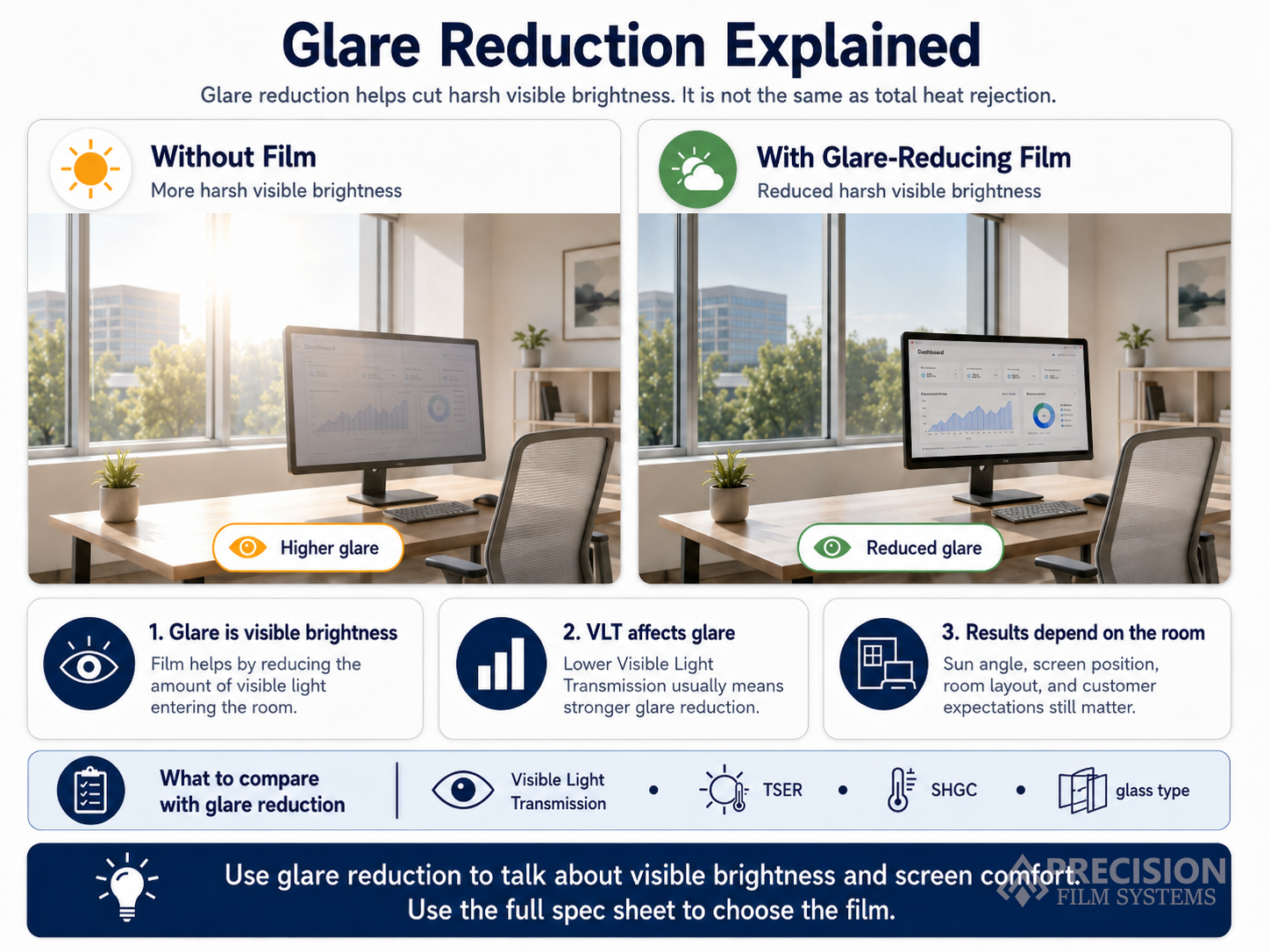
Glare in Plain English
Glare is uncomfortable brightness.
It can show up as sunlight hitting a computer screen, a bright reflection across a conference table, harsh light in a living room, or a storefront where the glass makes it hard to see displays clearly.
Window film can reduce glare by lowering the amount of visible light coming through the glass.
A darker film usually reduces more visible brightness. A lighter film may keep the room more open and natural, but it may not cut enough glare for the customer's actual problem.
Glare Reduction and VLT
Glare reduction is closely tied to visible light transmission, or VLT.
VLT tells you how much visible light passes through the glass and film. Glare reduction tells you how much visible brightness is reduced.
A film with lower VLT usually has higher glare reduction because less visible light is getting through.
That does not mean the lowest VLT is always the best answer. A very dark film may reduce glare, but it can also make the room feel too dark or change the view more than the customer wants.
Glare Reduction Is Not Heat Rejection
Customers often mix up glare, heat, and brightness.
A room can feel hot and bright at the same time, but those are not the same problem. Glare reduction is mostly about visible light.
Heat control needs a wider look at the spec sheet, including:
- TSER
- SHGC
- IR Energy Rejection
- Total solar transmission
- Total solar absorbance
- Reflectance
- Glass type
- Sun exposure and shading
A glare-focused film may not be the strongest heat-control option. A strong heat-control film may not reduce glare enough if it keeps a high VLT.
The customer's actual problem should guide the recommendation.
Where Glare Reduction Helps Most
Glare reduction comes up often in:
- Offices with computer screens
- Conference rooms with presentation displays
- Homes with TVs or workstations near windows
- Schools and training rooms
- Retail spaces with displays or checkout screens
- Restaurants with bright afternoon sun
- Lobbies or waiting rooms with direct exposure
The best film choice depends on what the customer is trying to see more comfortably. A customer working on a screen may need a different solution than a homeowner trying to soften bright afternoon light in a living room.
Glare Reduction and Glass Risk
Glare reduction by itself is not usually the glass-risk number.
The glass risk conversation usually comes from the full glass and film system: total solar absorbance, glass type, Low-E coatings, insulated glass units, partial shading, existing damage, edge condition, and manufacturer guidance.
Darker films may reduce more glare, but they may also absorb more solar energy depending on construction. That is where the film-to-glass check matters.
What to Check Before Recommending for Glare
Before choosing a film for glare reduction, check the actual glare problem.
Useful questions include:
- Where is the glare happening?
- What time of day is it worst?
- Is the issue direct sun, reflected light, or screen visibility?
- Does the customer want to keep the room bright?
- Is heat also a problem?
- Is daytime privacy part of the goal?
- Are there Low-E coatings, insulated glass units, or partial shade patterns?
These questions keep the film choice tied to the room instead of one glare percentage.
How to Explain Glare Reduction to a Customer
A simple explanation is:
"Glare reduction tells us how much harsh visible brightness the film helps reduce. It is closely tied to how much visible light the film lets through. A darker film usually cuts more glare, but we still need to balance that against daylight, appearance, heat performance, and your glass type."
That keeps the benefit clear without promising the room will feel perfect in every condition.
A Practical Wording Example
If a customer says:
"I just want to stop the glare on this screen."
A good response is:
"We can reduce the glare, but I want to see where it is coming from first. If it is direct sun through this glass, a lower VLT film may help. If it is reflection from another surface or a screen placement issue, film can still help, but the result depends on the room."
That gives the customer a real answer without turning glare reduction into a guarantee.
Installer Takeaway
Glare reduction is a useful spec when the problem is harsh visible brightness.
Use it with VLT to explain how much light the film allows through and how much brightness it may reduce.
Do not treat glare reduction as a heat claim, privacy claim, or comfort guarantee. Compare it with TSER, SHGC, IR energy rejection, total solar absorbance, reflectance, glass type, and the customer's actual use of the room.
For flat glass jobs, the better recommendation is not always the darkest film. It is the film that reduces the glare problem without creating a new problem with appearance, daylight, compatibility, or expectations.
Related Terms
- VLT
- TSER
- SHGC
- IR Energy Rejection
- Visible Light Reflectance INT/EXT
- Daytime Privacy
- Total Solar Absorbance
- Film-to-Glass Compatibility
Source and further reading
- 2026 Flat Glass Solar Education Guide - International Window Film Association Industry education on visible light, solar energy, glazing, film performance, and the conditions that shape glare-reduction results.
Glare reduction on a window film spec sheet
What does glare reduction mean in window film?
Glare reduction describes how much a window film helps reduce harsh visible brightness compared with untreated glass.
Is glare reduction the same as heat rejection?
No. Glare reduction is mostly about visible brightness. Heat-control conversations should also compare TSER, SHGC, IR rejection, solar absorption, reflectance, glass type, exposure, and manufacturer guidance.
Does lower VLT usually reduce more glare?
Usually, yes. Lower VLT means less visible light passes through the glass and film, which often means stronger glare reduction. The right choice still depends on daylight, appearance, glass conditions, and the customer's use of the room.
Can window film eliminate glare?
Window film can reduce glare, but it should not be sold as a guarantee that glare will disappear in every condition. Sun angle, screen position, reflections, room layout, and customer expectations still matter.
What should be checked besides glare reduction?
Check VLT, TSER, SHGC, IR rejection, solar absorption, reflectance, glass type, Low-E coatings, insulated glass units, exposure, shading, and manufacturer film-to-glass guidance.