
Decorative film terms can get messy because customers do not always use the same words installers use.
A customer may say frosted when they mean privacy. They may say opaque when they only mean blurry. They may say decorative when they want to hide something. They may say privacy film and still expect light, view, and a clean design.
Start by asking what they want the glass to do.
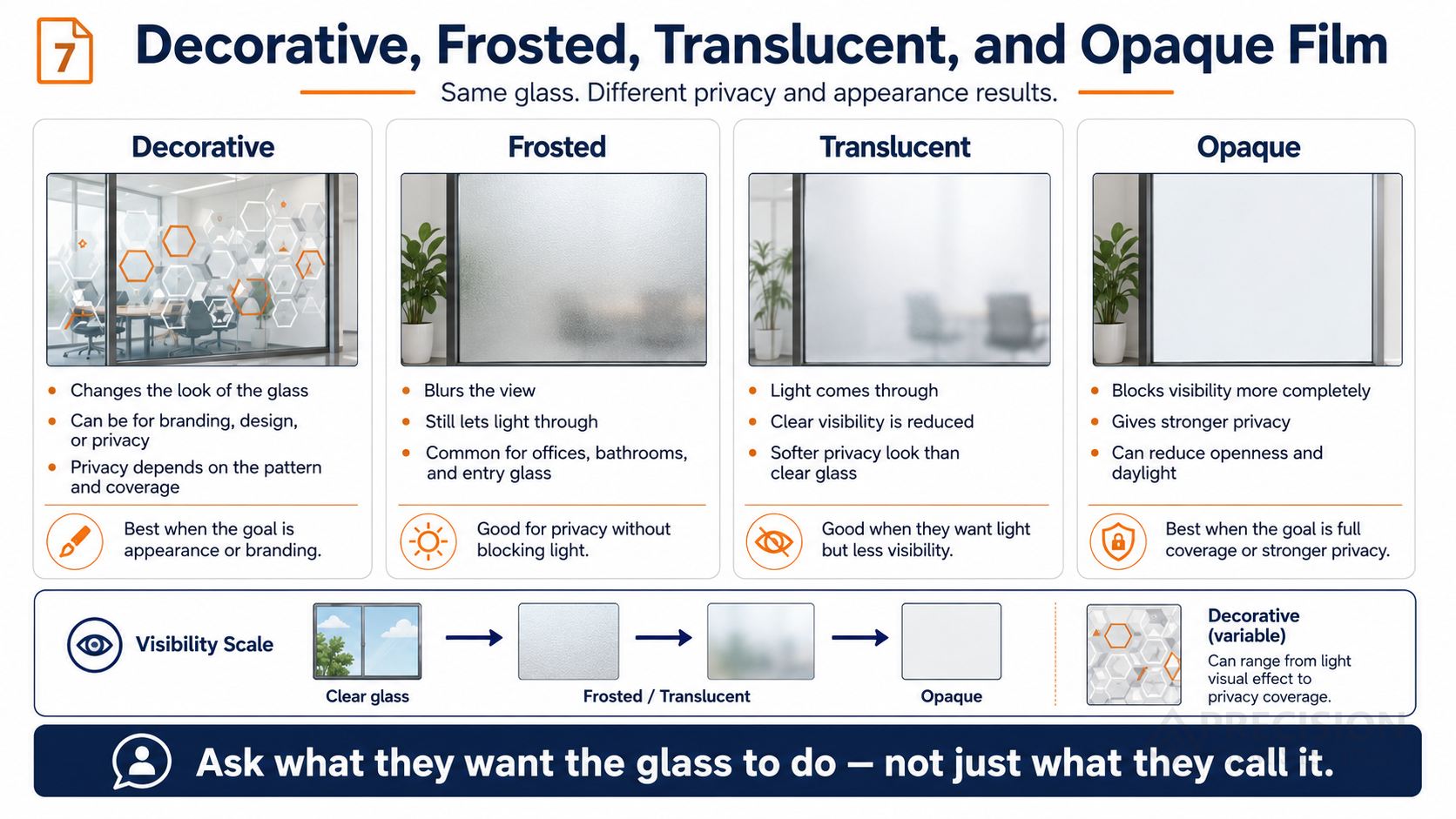
Decorative Film
Decorative film is a broad category.
It can include patterns, stripes, dots, gradients, frosted designs, printed graphics, logos, etched-glass looks, or custom designs.
Sometimes it is for privacy. Sometimes it is for branding. Sometimes it is only there to improve the look of the glass.
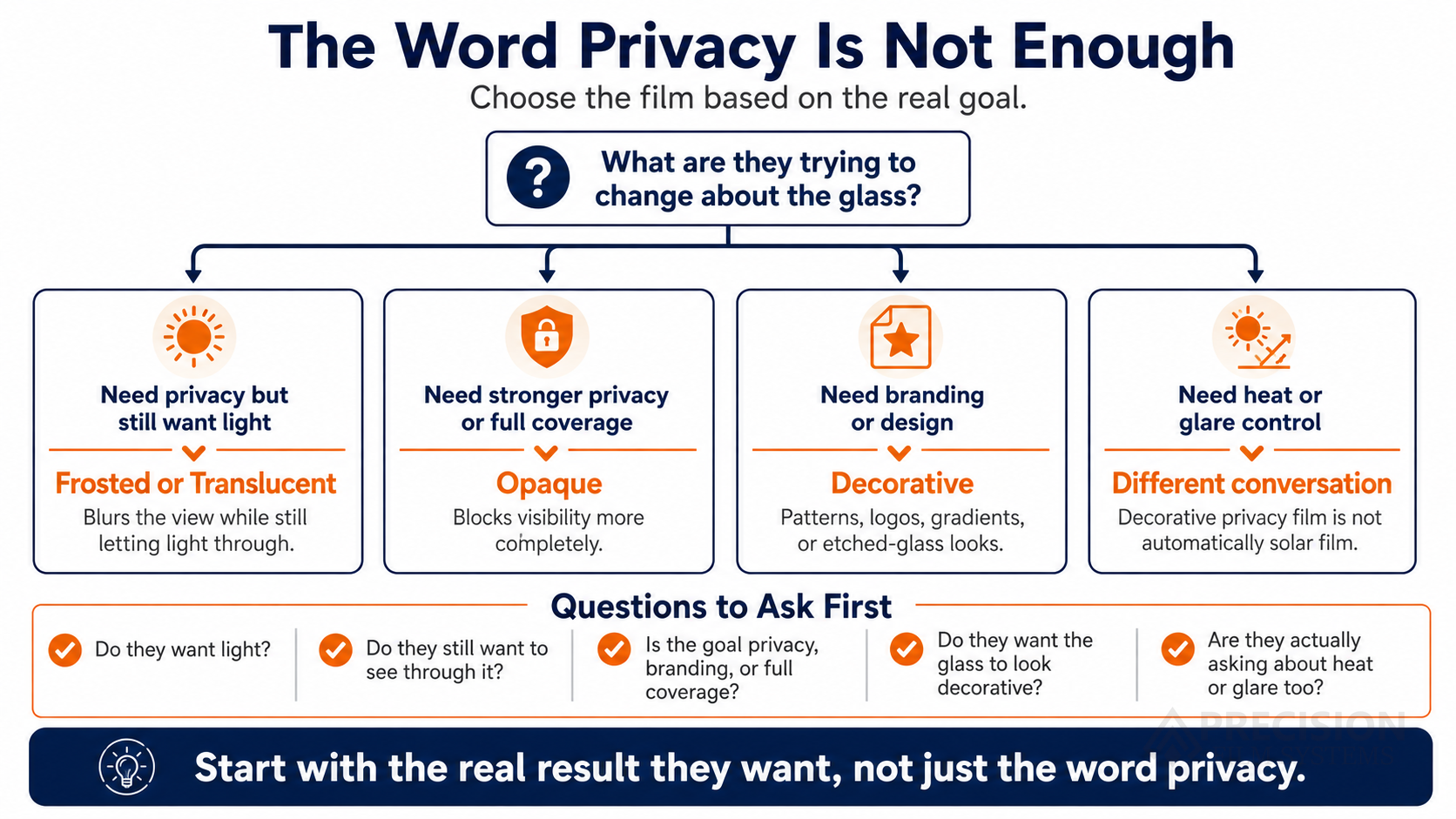
Decorative film is not automatically a heat-control film. If the customer's actual issue is heat or glare, check whether the product has the solar specs to support that conversation.
Frosted Film
Frosted film gives glass an etched or sandblasted look.
It is often used when the customer wants privacy while still allowing light through.
Common uses include office fronts, conference rooms, bathrooms, entry doors, interior glass walls, medical offices, professional spaces, and sidelites.
Frosted film usually blocks a clear view, but it does not usually block all light.
Translucent Film
Translucent means light comes through, but the view is blurred or blocked.
Many frosted films are translucent, but translucent films can vary. Some are white, matte, patterned, gradient, lightly diffused, or more heavily obscuring.
Ask how much the customer wants to see through the glass before choosing the product.
Opaque Film
Opaque film blocks visibility more completely.
It is used when the customer wants to stop people from seeing through the glass, not just soften the view.
It can work for storage areas, back-of-house glass, private rooms, unused glass panels, design panels, blocked views, and full privacy areas.
Opaque film can also reduce openness and daylight, depending on the product.
"Privacy" Is Not Specific Enough
Privacy can mean different things.
It can mean daytime privacy, nighttime privacy, blurred view, full coverage, branding, hiding clutter, bathroom privacy, office privacy, or blocking a view completely.
Those are different recommendations.
Ask for the result, not just the category name.
Decorative Film Is Not Always Solar Film
A frosted film may solve privacy and do very little for heat.
A solar film may reduce heat and glare but fail the privacy expectation at night.
A reflective film may help during the day but not at night.
The film category needs to match the real problem.
Customer Explanation
Decorative film changes the look of the glass. Frosted and translucent films let light through but blur the view. Opaque film blocks visibility more completely. The right choice depends on whether you want privacy, daylight, view, branding, or full coverage.
Installer Notes
Decorative, frosted, translucent, and opaque are appearance and privacy terms.
They are not automatically heat-control terms.
Ask whether the customer wants light, view, full privacy, branding, or something hidden before choosing a film.
Related Terms
Source and further reading
- 2026 Flat Glass Solar Education Guide - International Window Film Association Industry education on glass, film constructions, visible-light behavior, privacy, and the distinctions among architectural film categories.
Decorative and privacy film terms
Is frosted film the same as opaque film?
No. Frosted film usually lets light through while blurring the view. Opaque film blocks visibility more completely.
Does decorative film reduce heat?
Not automatically. Decorative film is usually for appearance, privacy, or branding. Heat performance depends on the specific product.
What does translucent mean?
Translucent means light comes through, but the clear view is reduced or blocked.
What should I use for full privacy?
Opaque, blackout, whiteout, or certain decorative privacy films may be better for full privacy, but they also change daylight, view, and appearance.