
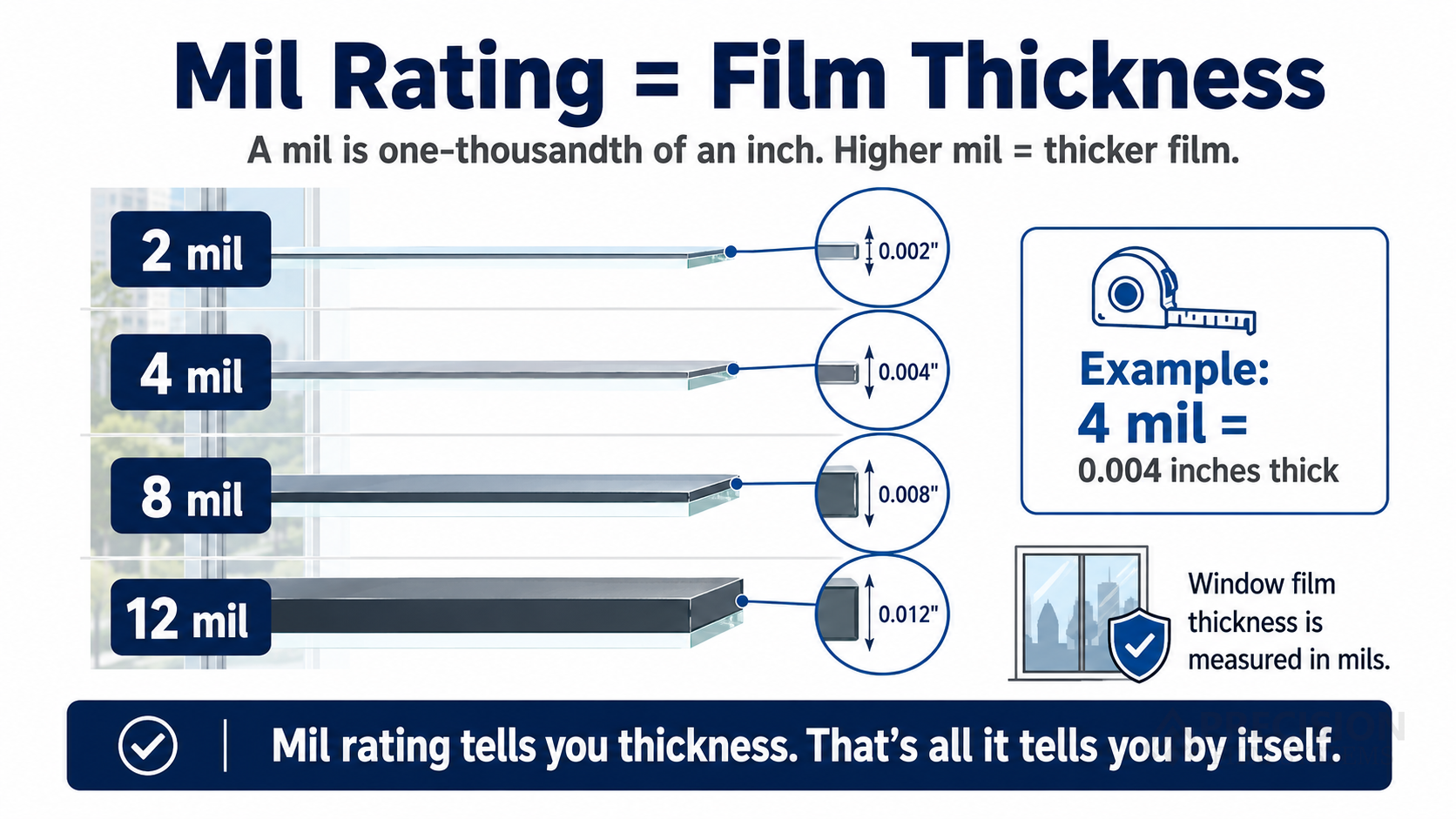
Mil rating tells you how thick the film is.
A mil is one-thousandth of an inch. A 4 mil film is about 0.004 inches thick.
That measurement is simple. The misuse is treating thickness like it automatically means better.
What Mil Rating Means
Mil rating is a thickness measurement.
Common examples include 2 mil, 4 mil, 7 mil, 8 mil, 12 mil, and 15 mil.
Higher mil means thicker film.
That number does not tell you the adhesive, solar performance, clarity, attachment requirements, glass compatibility, or whether the film fits the customer's goal.
Where Thickness Matters Most
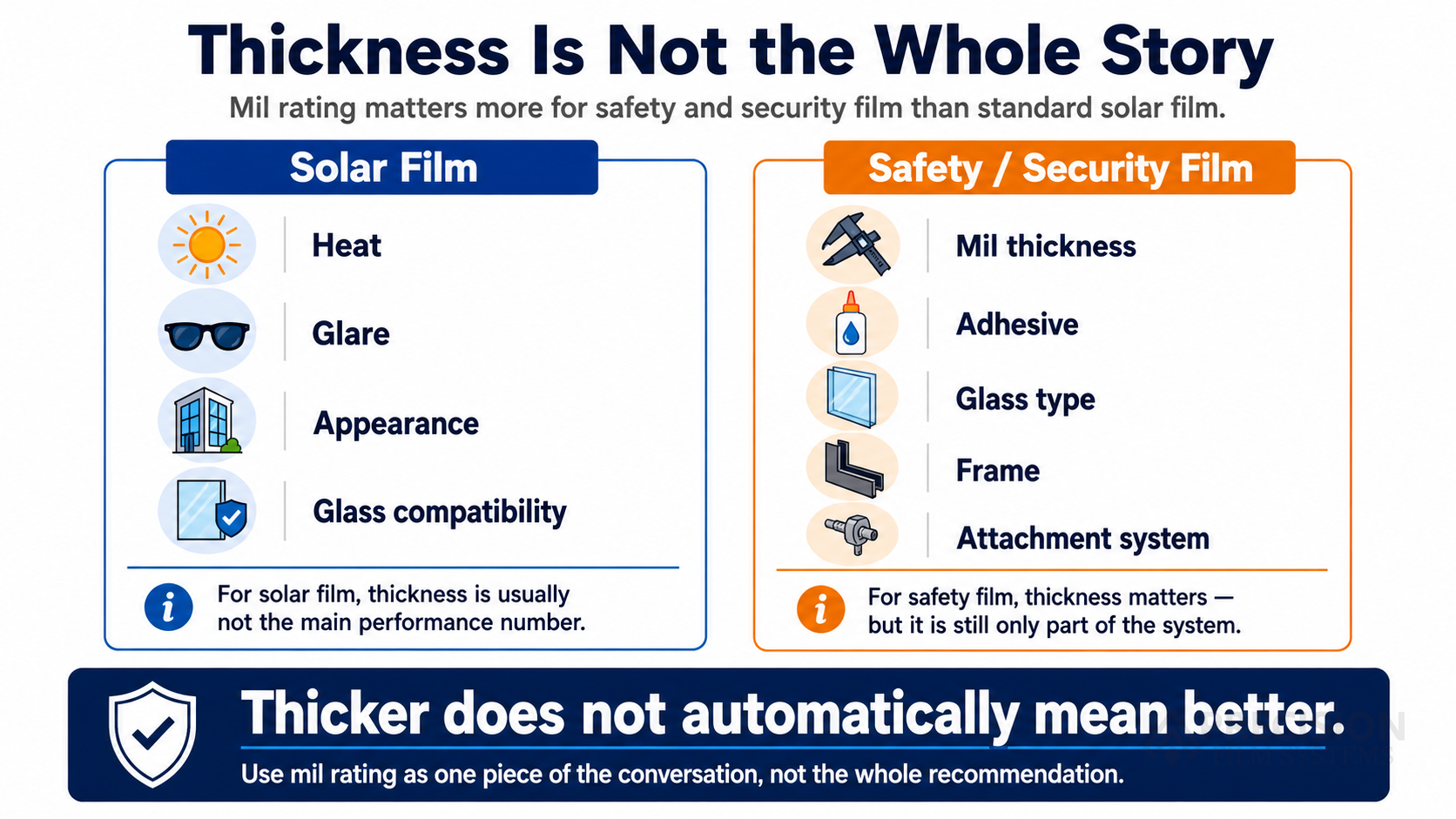
Thickness matters more in safety and security film conversations.
If the customer is asking about smash-and-grab, glass retention, storm concerns, schools, commercial security, or impact concerns, mil rating belongs in the discussion.
Even then, the mil number is only part of the system. Film type, adhesive, glass, frame, attachment method, specification requirements, and customer expectations still matter.
For the difference between film thickness, attachment, and tested assemblies, see the safety and security window film systems reference.
Solar Film and Mil Ratings
For solar film, thickness is usually not the main performance number.
Solar film conversations usually involve heat, glare, fading, privacy, appearance, daylight, cost, glass type, and compatibility.
A thicker solar film is not automatically a better solar film. A thinner solar film is not automatically a cheap or weak product.
If the job is about heat or glare, look at the solar specs and the glass conditions first.
Safety Film and Attachment Systems
Safety film conversations need careful wording.
A customer may hear "safety film" and assume the glass will not break. Glass can still break.
Safety film may help hold broken glass together. Some systems may help delay entry. The result depends on the product, glass, frame, attachment method, and installation details.
Depending on the goal, an attachment system may be needed. That changes the quote, labor, edge details, and expectation review.
Customer Explanation
Mil rating is the thickness of the film. It matters more when we are talking about safety or security film. For solar film, the heat, glare, appearance, and glass compatibility specs usually matter more than thickness alone.
For safety film:
Thicker film can help with glass retention, but it does not make glass unbreakable. The glass, frame, attachment method, and product specs all matter.
Installer Notes
Use mil rating when thickness is relevant.
Do not use it as a general quality score.
For solar film, focus on performance specs and glass compatibility.
For safety film, review the full system, not just the mil number.
Related Terms
- Safety Film
- Security Film
- Solar Film
- Attachment System
- Glass Retention
- Adhesive
- Film Construction
Sources and further reading
- 2026 Flat Glass Solar Education Guide - International Window Film Association Industry education on architectural-film construction, material layers, product categories, and specification terminology.
- 2026 Advanced Solar Control Education Guide - International Window Film Association Advanced reference for reading film specifications and separating material properties from tested system performance.
Film Thickness and Mil Rating FAQs
What does mil mean in window film?
A mil is one-thousandth of an inch. A 4 mil film is about 0.004 inches thick.
Is thicker window film better?
Not automatically. Thicker film may matter for safety or security work, but it does not automatically mean better solar performance, better appearance, or better compatibility.
Does mil rating matter for solar film?
It can be listed, but it is usually not the main performance number for solar film.
Does safety film need an attachment system?
Sometimes. It depends on the glass, frame, film, threat level, and expected performance.